Ningbo Bohua Mechanical Parts Co., Ltd. · Linda, Export Sales · linda@ningbobohua.com · www.bohua-casting.com
Engineering guide
Which Casting Process Fits Your E-Axle Housing?
For e-axle housing casting, put sand casting on the shortlist when demand is low or the core layout drives the design. For repeat demand, compare gravity permanent mold and low-pressure casting. Add high-pressure die casting for a compact end cover when the volume can justify a die and the part can release from it. Count annual demand separately for each casting.
On this page
- Which e-axle housing casting process fits your annual volume?
- What changes when the motor housing has a coolant jacket?
- Should the end cover and reducer housing use the same process?
- How many mold shots should your quote cover?
- What should go on the drawing and the RFQ?
- At Bohua
- E-axle housing casting questions
Which e-axle housing casting process fits your annual volume?
Use annual demand to decide which routes to quote. Confirm the core, machining, and sealing requirements before selecting a route. This quick reference covers commercial vehicles, off-highway equipment, electric outboards, and two-wheelers. Count accepted parts per year for each casting design.
| Process | Demand scenario for each casting design | Parts to put on the shortlist | Check before releasing tooling |
|---|---|---|---|
| Sand casting | Low or uncertain annual demand | Early water-jacket motor housings, bulky reducer cases, and low-volume end covers. | Confirm core support and removal, machining stock, and the cost of recurring molds and cores. |
| Gravity permanent mold, including tilt pour | Repeat demand that can justify permanent tooling | Repeat orders for end covers, reducer cases, and motor housings that can use a supported sand core. | Check mold opening, core location, and feeding around bearing bosses and sealing flanges. |
| Low-pressure casting (LPDC) | Repeat demand for which controlled fill is worth quoting | Cored motor housings or reducer cases that benefit from controlled bottom filling and pressure feeding. | Check where the feed enters, which sections freeze last, and how the finished casting will pass its leak test. |
| High-pressure die casting (HPDC) | Stable demand that can justify the die | Compact ribbed end covers and open housings with features the die can release. | Verify press fit, slide access, alloy and temper, and internal soundness after machining. |
For example, if your forecast is 300 housings a year, ask how a sand-cast route will handle core placement and cleanout. If a separate compact end cover is forecast at 20,000 a year, quote a die-cast option alongside a permanent-mold option. These are hypothetical forecasts. Compare comparable quotes for the finished casting at your actual demand.
For the relationship between volume and tooling, see the European Aluminium Automotive Manual, Design for Cost Optimization, version 2011, p. 43.
What changes when the motor housing has a coolant jacket?
Confirm how the proposed route will form, locate, and clean out the jacket before you compare housing quotes. An enclosed coolant passage can call for a removable sand core, a split housing, or a separate sleeve. Each option changes the tool, the sealing interfaces, and the acceptance tests.
Ask the foundry to identify the core supports on the casting layout. Review the gap between the core and the outer wall where thickness matters. Check whether the core can shift as the metal fills around it. Provide a cleanout path and define how to verify that loose sand is gone. Include any plug or closure in the scope if it becomes part of the finished pressure boundary.
Identify each circuit on the drawing. A coolant jacket can leak outward or into a dry motor cavity. A reducer case may retain oil across a different set of faces and openings. Specify which cavities the fixture seals and which adjacent cavities the test monitors. If machining can expose a leak path at a port or sealing face, specify a test on the finished part. A test at the raw casting stage can also help locate issues before machining.
State the medium, test pressure, stabilization and hold time, and pass criterion. If the specification calls for a measured leak rate, include the unit and test method. Define the required cleanliness or flow check separately if a remaining core fragment or a restricted passage could affect assembly or cooling.
A reducer-housing study in the 75th World Foundry Congress proceedings (2024) describes low-pressure casting with assembled sand cores and a leak test after processing.
Should the end cover and reducer housing use the same process?
Quote the end cover and reducer housing separately. An open, ribbed end cover with a bearing seat may be a candidate for HPDC. A deep reducer housing with a cored passage or a thick bearing support may benefit from sand casting, gravity permanent mold, or LPDC.
For an end cover, put the bearing seat, locating pilot, and sealing face in the same datum scheme. Give the bearing fit and the relationship between the seat axis and the cover face. Review how the fixture locates the casting and whether the critical surfaces can be cut from the same setup. Agree which dimensions to check on the unrestrained part.
For a reducer housing, provide the shaft center distance and the relationships between bearing bores. Identify machining access on both sides of a deep bore or internal shoulder. Give the cover joint and its sealing requirements. An internal wall can obstruct a cutter, and a thick boss at a rib intersection can create a feeding problem. Those features can change the route even when the housings share an annual volume.
For HPDC, ask for the clamping and shot capacity check using the proposed tool and cavity count. Include projected area, runners, slides, and the total shot. An accessible cover and a deep housing can make very different demands on the same machine. If a cover needs T6 or a pressure seal, verify that the proposed alloy and casting process can meet that condition.
See the motor housing and end-cover manufacturing scope, the gearbox housing manufacturing scope, or the die-casting process page for the next step on a specific drawing.
How many mold shots should your quote cover?
Use the total accepted quantity over the program to estimate how many production shots the mold must support. Get the number of castings per shot from the supplier. Add the effect of rejects, setup shots, and samples before comparing tool life and maintenance plans.
| Input or result | Example | How to use it |
|---|---|---|
| Accepted demand | 8,000 parts/year | Use this housing's demand after separating the end-cover forecast. |
| Program length | 3 years | Confirm how long the design and demand are expected to hold. |
| Castings per shot | 1 | This example assumes a single-cavity mold. |
| Minimum program shots | 24,000 shots | 8,000 × 3 ÷ 1. Add setup, approval samples, and expected production losses. |
At a planning life of 20,000 shots, the example is already 4,000 shots short before allowances. At 50,000 shots, the nominal margin is 26,000 shots before those allowances. Get the supplier's estimate for this casting and the expected service interval. Ask which inserts are replaceable, who pays for refurbishment, and whether a major repair triggers a new approval.
Compare quotes for the same delivery condition. Include the pattern or die, core boxes, machining fixtures, core usage, heat treatment, final inspection, and planned tool service. Divide the total cost over the program by accepted finished pieces. Then check peak releases separately. A route that looks economical at annual demand must also have enough machining and test capacity to meet the busiest release window.
See the gravity casting tooling cost guide for the items to separate in the tooling quote.
What should go on the drawing and the RFQ?
Put acceptance criteria on the drawing or in referenced specifications. Put the volume forecast, release pattern, quote scope, and timing in the request for quote (RFQ). Use the same revision and deliverables for each proposed route.
- Define the casting and delivery state. Send the drawing and the matching solid model. Identify the alloy specification and temper, and say whether you want a raw or fully machined casting.
- Mark the pressure boundary. Show the coolant and oil passages, connections, sealing faces, and test stage. Reference the leak-test method, test conditions, and acceptance criterion.
- Mark the functional datums. Call out bearing fits, locating pilots, bore alignment, and cover flatness. Identify dimensions to record after heat treatment and machining.
- Give demand per casting. List first-article quantities, annual demand by year, peak releases, and program length. Request the proposed route, cavity count, tool-life basis, inspection scope, and maintenance assumptions.
Use the EV aluminum housing RFQ checklist to assemble the drawing package.
At Bohua
Bohua offers a free drawing review for aluminum castings. The review starts with your required part performance. Our engineers then recommend a casting process and propose drawing changes where the process calls for them. You decide which changes go into the drawing.
Casting, tooling, and inspection
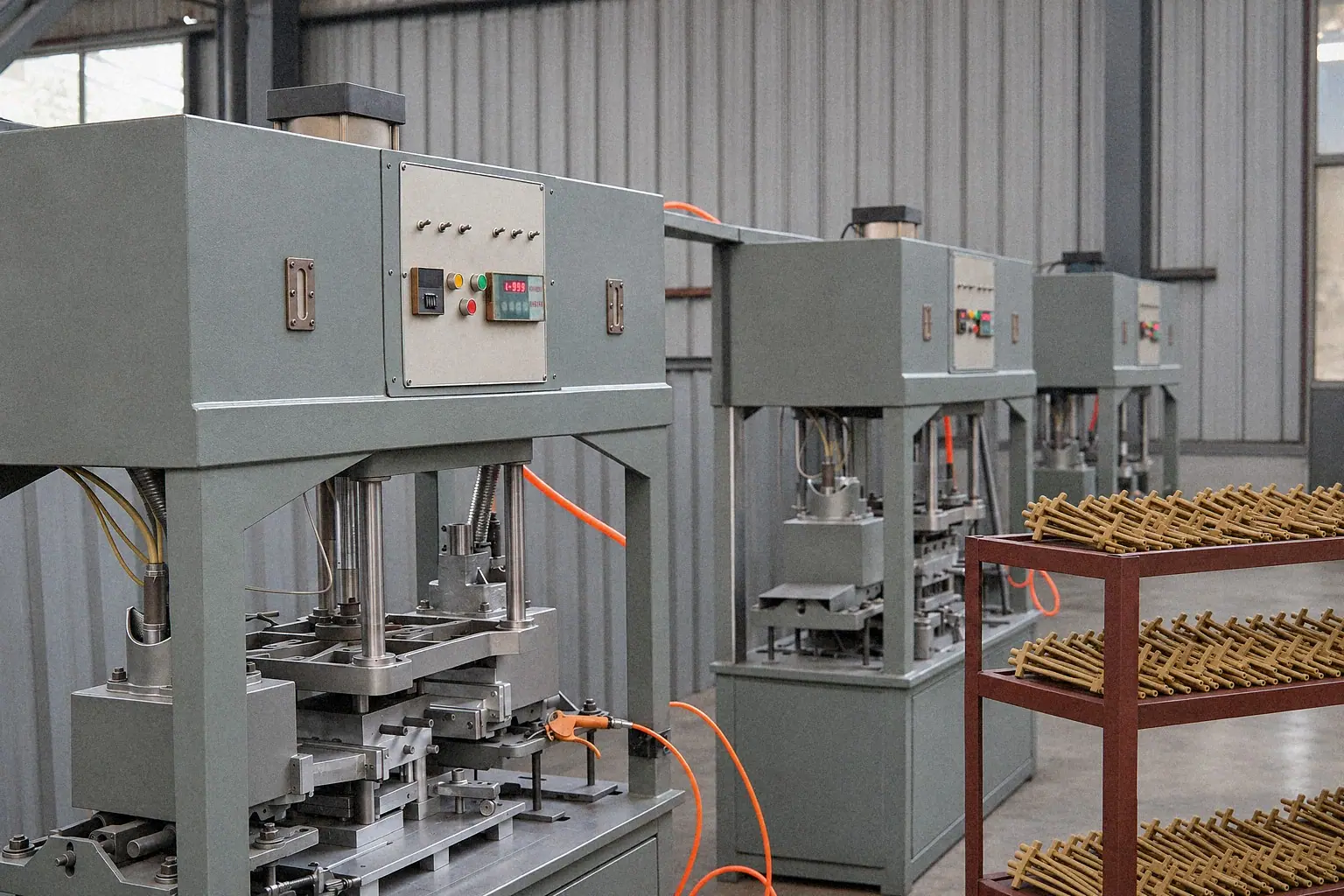
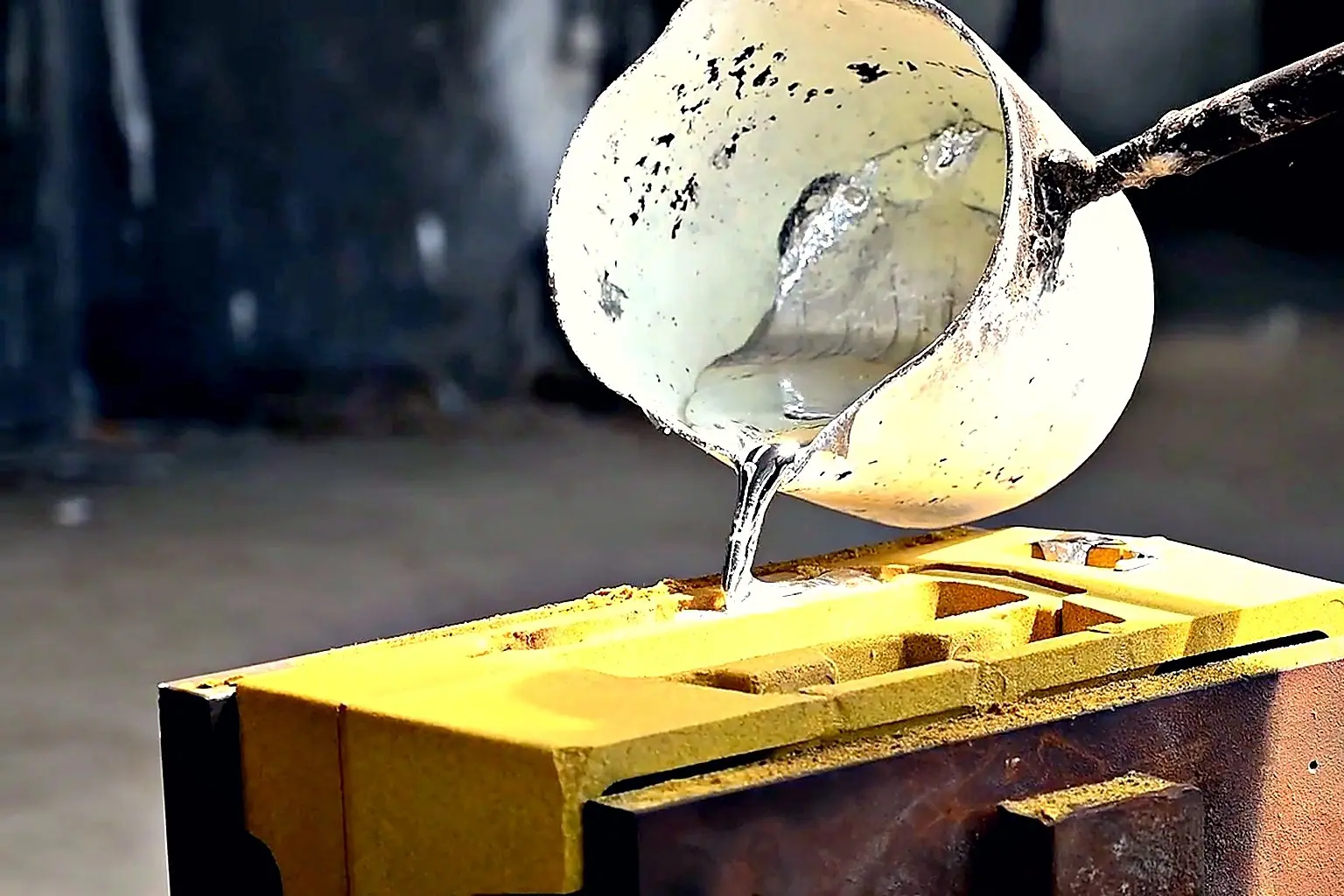
Bohua offers sand casting, gravity casting including tilt pour, low-pressure casting, and high-pressure die casting in-house. Die casting runs on two machines rated at 280 t and 450 t; housings too large for them are quoted in sand, gravity, or low-pressure casting. Low-pressure casting has been in-house since 2014. The plant operates 10 hot-box core shooters, and some tilt-pour castings use sand cores. We also provide in-house T5 and T6 heat treatment, CNC machining, X-ray inspection, and coordinate measurement.
We design and build molds in-house. GB 45 carbon steel molds typically run about 20,000–50,000 shots. H13 molds run about 100,000 shots with prescribed maintenance. The choice depends on tool wear and economics for the part. Allow about 5–6 weeks from drawing confirmation to first article for planning. Discuss the production release schedule separately during drawing review.
Leak testing uses air-under-water immersion at 3 bar or more. Share your acceptance pressure and the drawing-specific test requirements during review. Quotes are based on annual volume. Small batches are negotiable.
Send the drawing, annual demand, and pressure-boundary requirements through the casting drawing review and quote page. Tooling, samples, and parts are quoted for the project.
E-axle housing casting questions
Run the selection for each drawing and compare routes on the same finished part requirements.
Can I start with sand casting and move to a metal mold later?
Yes. Plan for new tooling, a review of draft and stock, and new validation for the production route. Preserve the functional interfaces in the drawing so both routes can be evaluated against the same targets.
When should I quote low-pressure casting alongside tilt pour?
Quote both when a cored passage or a heavy section near a bearing seat makes fill and feeding important. Ask each supplier to explain where the metal enters, how the casting is fed, and how the finished casting will be inspected.
Does the coolant jacket need a leak test after machining?
Specify a finished-part test when machining cuts into the pressure boundary or creates its sealing faces. Define how the fixture closes the ports and which adjacent cavities it checks.
Can a die-cast end cover pair with a gravity-cast motor housing?
Yes, if each part meets its drawing and the assembled joint passes its validation. Quote each casting separately and give both routes the same interface datums, locating scheme, and sealing requirements.
Send your e-axle housing drawing for a free review
Include annual demand for each casting, the coolant or oil boundary, critical bearing features, and your required machining and test scope. Submit the RFQ details, then email your drawing for review.
Send your drawing →