Ningbo Bohua Mechanical Parts Co., Ltd. · Linda, Export Sales · linda@ningbobohua.com · www.bohua-casting.com
Application
Aluminum Side Channel Blower Housings and Impellers
An aluminum side channel blower housing and impeller can be cast and finish-machined to a shared assembly drawing. Specify radial and axial clearances separately from the installed shaft axis and cover stack. Bohua offers a free drawing review for small batches and repeat releases. The interval from drawing confirmation to first article is 5–6 weeks.
Can the blower housing and impeller be machined as a set?
The side channel blower housing, cover, and impeller can be machined to a shared assembly drawing. Reference the housing and cover to the installed shaft axis. Locate the impeller from its mounting bore and hub face. Define limits across production parts if replacements must interchange.
| Part or interface | Cast or machine | What the RFQ must define |
|---|---|---|
| Side channel housing | Cast the body and channel near shape where suitable. Machine the locating register and specified clearance surfaces. | Installed axis, channel profile, and machining limits |
| Cover | Machine the register, split face, and surfaces that control axial position. | Assembled stack, gasket condition, and fastener state for inspection |
| Regenerative blower impeller | Review the blade geometry for casting. Finish the hub bore, seating face, and specified rotor surfaces. | Rotor envelope, runout relative to the mounting axis, and balance responsibility |
| Centrifugal fan volute | Review the scroll as its own casting. Machine the inlet ring seat and mounting features as specified. | Inlet ring location, wheel envelope, and clearance at the relevant interfaces |
A regenerative blower recirculates gas through a side channel. A centrifugal fan volute collects flow from the wheel into a scroll. Send section views through the actual rotor and housing interfaces so the machining review follows the machine design.
How do you budget radial and axial clearance?
Set separate minimum radial and axial running clearances at the relevant locations on the assembly drawing. State the operating conditions and the separate inspection condition. Work backward to size, form, position, and runout limits on the part drawings. Include the seated impeller, cover, and any compressed gasket or shim in the axial stack.
| Step | Calculation or input in mm (in) |
|---|---|
| Housing clearance diameter, nominal ± tolerance | 150.60 ± 0.10 (5.9291 ± 0.0039) |
| Impeller outside diameter, nominal ± tolerance | 150.00 ± 0.10 (5.9055 ± 0.0039) |
| Nominal concentric radial gap | (150.60 − 150.00) ÷ 2 = 0.30 (0.0118) |
| Minimum concentric radial gap at the size limits | (150.50 − 150.10) ÷ 2 = 0.20 (0.0079) |
| Minimum cold radial gap after the assumed center offset | 0.20 − 0.05 = 0.15 (0.0059), allowing 0.05 (0.0020) for the offset |
The example uses hypothetical sizes and ideal circular surfaces at one section. Inch values are rounded reference equivalents. This calculation estimates a cold, static radial gap. Check the operating gap separately for form error, rotor runout, bearing movement, thermal growth, and deflection. Avoid counting the same deviation twice when the runout check already includes it. Check the axial gap at its own drawing location.
For interchangeable parts, apply the drawing limits across allowable housing and rotor combinations. If selective assembly is permitted, specify how parts are paired and whether replacements must ship as a set. The CMM inspection guide for cast aluminum parts explains how to specify a measurement report.
At Bohua
Bohua offers a free drawing review for small batches and repeat orders. Send the housing and impeller drawings together so the review can cover their shared dimensions and the machining requirements on each part.
At Bohua
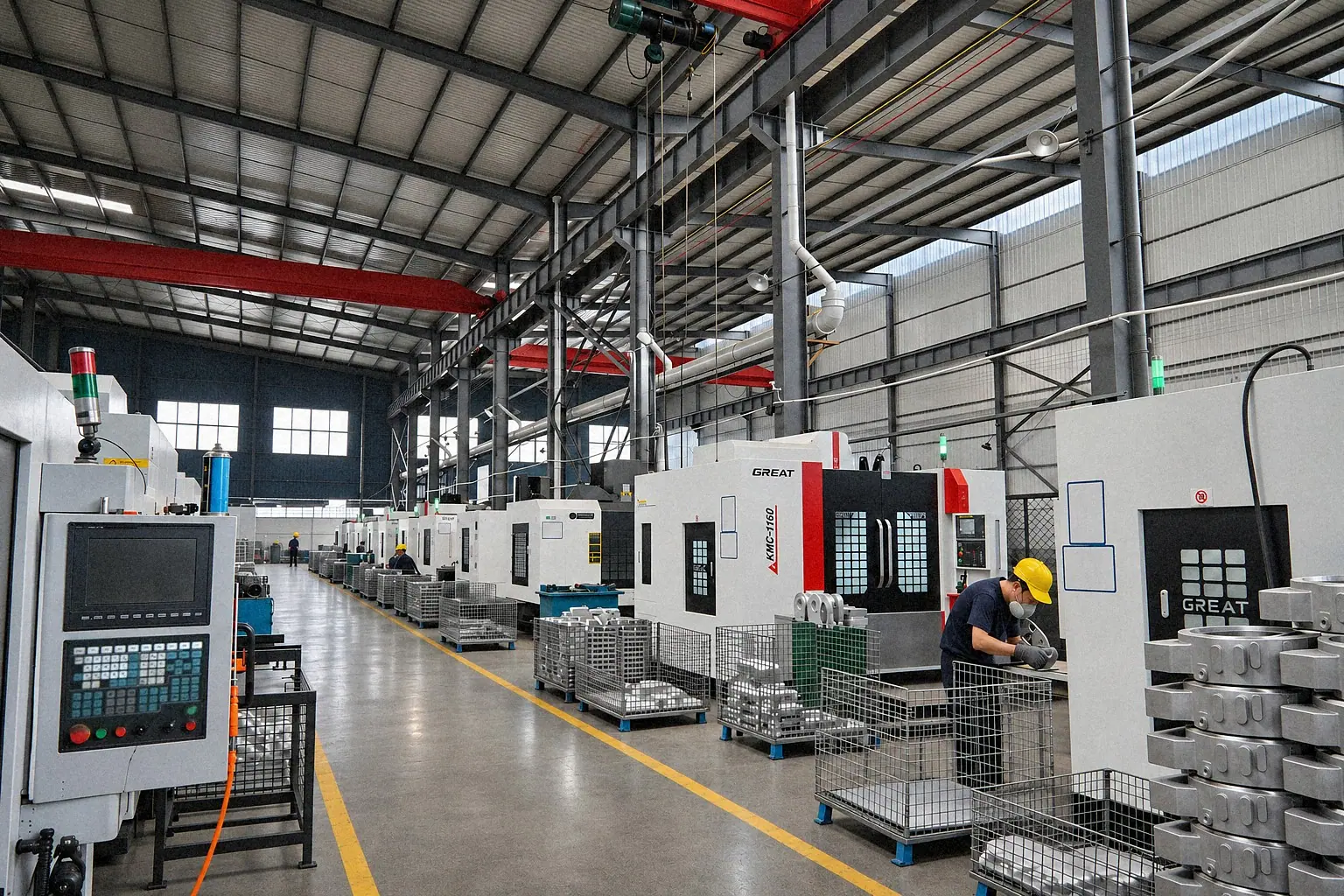
Bohua offers in-house gravity casting, including tilt-pour, plus low-pressure casting, sand casting, and die casting on two machines rated at 280 t and 450 t. Bohua can take aluminum castings into batch production. CNC machining includes 16 vertical machining centers and 22 CNC lathes. Bohua has coordinate measuring machines for dimensional inspection.
Bohua designs and makes its molds in-house. The interval from drawing confirmation to first article is 5–6 weeks. Small batches are negotiable. Include the annual volume and expected release sizes in the request.
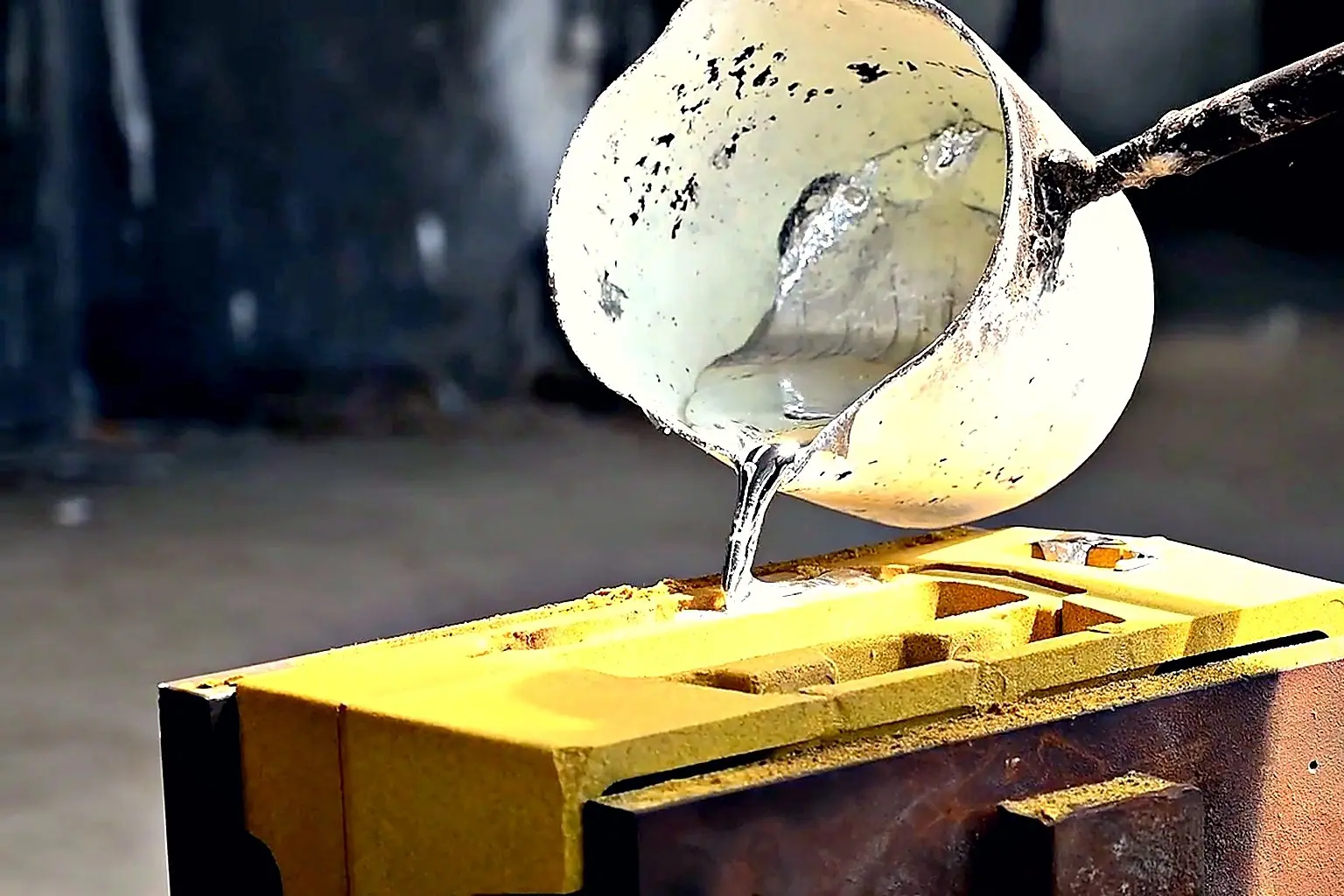
Compare sand casting for small releases and gravity casting for permanent-mold projects. Show thin blade tips, thick hub transitions, and areas where you permit extra stock. Review the impeller separately if its geometry calls for a different casting route from the housing.
What should the blower drawings and RFQ state?
Send section views and the finished model for each component. Mark the housing register, impeller bore, seating face, split faces, and surfaces that determine clearance. Give the required gap, where it is checked, and the assembly and temperature conditions for the check. Identify whether the parts ship as individually interchangeable components or matched sets.
When a rigid rotor requires balancing, specify ISO 21940-11:2016 and Amendment 1:2022 if applicable. State the required balance grade or residual unbalance limit, the operating speed used for acceptance, the rotor mass, and the correction planes. Identify who performs and reports balancing. Specify the rotor condition, such as bare, coated, or assembled, and where correction is permitted.
Include the initial and repeat quantities. State which clearance measurements and balance records must accompany the shipment. For a separate cooling-equipment application, see the dry-side casting guide for data center liquid cooling.
U.S. duties can differ substantially between machine parts and other aluminum articles under heading 7616, so use the U.S. aluminum casting tariff guide to prepare for a part-by-part classification and duty check with your customs broker.
For ordinary EU imports in 2026, blower parts correctly classified under CN 8414 90 00 carry 2.2% conventional duty and are outside the current CBAM Annex I scope, subject to entry-specific measures and the final text of any CBAM expansion.
Sources: 2026 EU Combined Nomenclature, Implementing Regulation (EU) 2025/1926, and Regulation (EU) 2023/956, Annex I.
Blower housing and impeller questions
Define the clearance and inspection requirements before deciding whether to buy interchangeable parts or matched sets.
Can the side channel stay as cast?
Show the surfaces whose profile or finish controls performance. The drawing review can identify which areas need machining and where a cast surface can remain.
Does an acceptable diameter guarantee a clear rotor?
Clearance also depends on the axis locations and the assembled stack. Show the radial and axial limits separately, including the condition in which each will be measured.
Does the impeller need a separate balance specification?
When balancing is required, specify whether acceptance applies to the bare impeller or the assembled rotor. Assign responsibility for the balance report in the RFQ.
Can I start with a small batch?
Small batches are negotiable. Give the initial order and expected repeat volume so the drawing review can compare sand casting and permanent tooling.
How do I start a matched-set RFQ?
Enter your blower project details for a free drawing review. Email the housing, cover, and impeller drawings and the assembled section to linda@ningbobohua.com after submitting the project details.
Request a free blower casting drawing review
Enter annual volume and clearance requirements on the quote page, then email the component drawings and assembled section. Submit the RFQ details, then email your drawing for review.
Send your drawing →