Ningbo Bohua Mechanical Parts Co., Ltd. · Linda, Export Sales · linda@ningbobohua.com · www.bohua-casting.com
Application
Aluminum AODD Pump Castings for OEMs
For aluminum air-operated double-diaphragm (AODD) pump castings, specify fluid covers and manifolds by their liquid-side boundaries. Specify the center section by its air passages and shaft or valve interfaces. Bohua can cast and machine aluminum parts to the drawing. Send the assembly and part drawings with separate test requirements for a free drawing review.
Which AODD pump parts need which checks?
Specify each casting by the boundary it serves. Fluid covers and manifolds need liquid-side acceptance. The center section needs a separate check for the air passages and moving assembly.
| Casting | Qty. in example layout | Critical features and checks |
|---|---|---|
| Fluid cover | 2 | Diaphragm seat, clamp or bolt flange, liquid chamber, and the finished sealing boundary |
| Inlet manifold | 1 | Suction passage, inlet thread or flange, mating lands, and specified check-valve interfaces |
| Outlet manifold | 1 | Discharge passage, outlet orientation, mating lands, and pressure boundary |
| Center section | 1 | Air galleries, spool or shaft alignment, valve mounting face, and air-side sealing |
These quantities cover the listed castings in one example assembly. Use the bill of materials for your revision to confirm handedness, port options, and any additional air-side castings. A diaphragm pump manifold casting can look similar at the inlet and outlet. Keep the port orientation visible on both drawings.
How should you cast the covers, manifolds, and center section?
Choose the process for each casting in the pump assembly. The deciding features can differ across the same pump. A wide cover flange raises machining and flatness questions. A curved manifold passage may need a removable core. An air-side casting can have small features that change the preferred process.
| Component | Route to evaluate | Inspection or machining focus |
|---|---|---|
| Fluid cover | Gravity permanent mold or tilt pour for a cover with an accessible cavity | Diaphragm seat finish, cover face geometry, clocking features, and clamp contact |
| Inlet and outlet manifolds | Cored gravity casting or sand casting for branched passages where the core can be removed | Port fit, branch alignment, wall thickness near the junction, core removal, and clean passages |
| Center section | Compare gravity, low-pressure, and die casting against the air passage geometry and alloy requirement | Shaft or bushing bore alignment and separation of air galleries where specified |
Specify material and finish separately for the wetted and air-side parts. Include the fluid, temperature range, and cleaning chemicals for material compatibility review. Use the sand casting process page for cored geometry and the tilt-pour casting process page for permanent-mold options.
How do you quote a repeat batch as a matched pump set?
Build the quantities from the pump assembly and break out the parts you want separately packaged. Shared geometry can still require a different drawing or machining setup for each position.
Worked example. Suppose your assembly uses the layout in the quick reference table. A release of 600 pump sets needs 600 × 2 = 1,200 fluid covers, 600 inlet manifolds, 600 outlet manifolds, and 600 center sections. The net requirement for the listed castings is 3,000 pieces. If this design uses one left and one right cover per pump, break the cover line into 600 left and 600 right without changing the total. Add spares separately. Show which parts must ship together so a delay on one casting does not leave the other parts stranded.
How do you check liquid-side and air-side integrity?
Define the inspection boundary at the component level and the validation boundary at the pump level. A test that locates an external casting leak leaves diaphragm seal performance and pump function to the relevant assembly checks.
For fluid covers, identify the diaphragm seating surface and what the test fixture closes. For manifolds, show which openings the fixture seals and which wall it checks. For the center section, map pressure, exhaust, and pilot air circuits. State which circuits need a separate leakage check. Use casting leak-test specification guidance to define medium, pressure basis, stabilization, observation time, and acceptance.
ANSI/HI 10.6-2021 includes hydrostatic testing of pumps or pressure-retaining components when specified. If your order invokes that test, identify the test owner and the required records. Keep the hydrostatic test separate from a casting immersion screen and from the completed pump performance test. Specify any fatigue validation separately using the applicable pressure cycles and assembly condition.
At Bohua
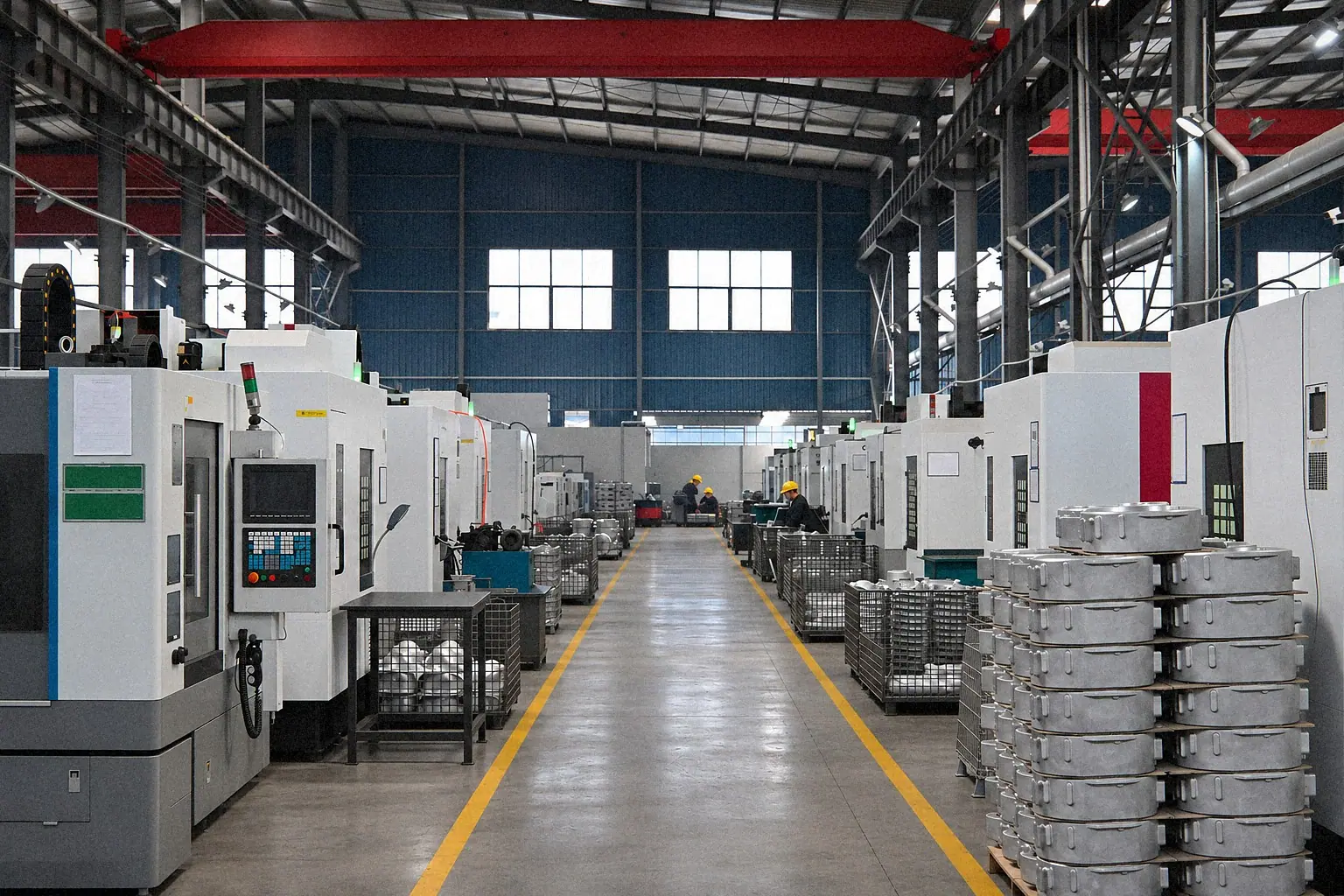
We cast and machine aluminum parts in batches and design our tooling in-house. We have 10 hot-box core shooting machines for sand cores. Gravity casting with tilt pour, low-pressure casting, sand casting, and die casting on two machines rated at 280 t and 450 t are available in-house. We use A356 and ZL114 for gravity and tilt-pour castings; die-casting alloys follow the customer's specification, and ADC12 is a common choice. We can include CNC machining and T6 heat treatment when the drawing calls for them.
We have X-ray, coordinate measurement, and fatigue testing capability. We can support PPAP up to Level 5. Our leak test uses air-under-water immersion at 3 bar (about 43.5 psi) or more. Put the specified pressure and fixture boundary for each casting in the RFQ. State which tests you need the casting supplier to quote and which tests the pump assembler will run.
What goes into an AODD pump castings RFQ?
Send the assembly view and individual part drawings with matching revisions. Mark the diaphragm seat, valve interfaces, and the datums that align the covers and manifolds. Include a delivery table with the part quantities per pump, the planned annual volume, and the order releases.
For each part, mark the alloy and temper, wetted surfaces, and features that need machining. Identify the tests required before shipment and any dimensional records, X-ray views, or PPAP documentation needed for approval. Include cleaning, drying, and port protection requirements for the machined parts. If parts must ship as matched sets, ask how the supplier will label parts and verify set completeness. Record which parts may ship separately during a partial release.
Start with the pressure-tight pump casting RFQ and include the fluid-cover, manifold, and center section drawings for a free drawing review. See the aluminum pump housing manufacturing page for other pump casting requirements. For U.S. imports, duties can differ substantially between machine-part classification and heading 7616 for aluminum articles, so see the U.S. tariff guide for castings and have your customs broker confirm each item.
AODD pump casting questions
Approve the part drawings and the complete pump test scope together so suppliers can quote the same work.
Can the inlet and outlet manifold share a casting blank?
Review both flow paths and machining envelopes first. Confirm whether the seals, valve seats, and port clocking can use the same blank without compromising finished wall thickness.
Can you quote only the fluid covers or the center section?
Yes. Send the individual drawings and their mating interfaces. The drawing review can cover the parts included in your order.
Should you inspect the diaphragm seat after machining?
Yes, when the seat is a finished sealing surface. Give its drawing datum, profile or flatness requirement, and finish. Specify the working contact area for the inspection report.
Can a bare casting leak check qualify the assembled pump?
Use the bare casting check to verify the specified casting boundary. Assign valve operation, diaphragm sealing, and pump performance to the assembly validation plan.
Send your AODD pump drawings for free review
Include the assembly, finished part drawings, and liquid-side and air-side test requirements. Submit the RFQ details, then email your drawing for review.
Send your drawing →