Compare China Casting Suppliers on the Same Scope
Compare China aluminum casting suppliers on tooling logic, MOQ, lead time, machining scope, testing, and export readiness before you approve the RFQ path.
Compare China casting suppliers using the same drawings, tooling assumptions, machining scope, inspection requirements, and delivery terms.
What procurement wants clarified
Commercial checkpoints before the buyer sends the RFQ
RFQ action
Prepare your quotation request
Include your drawing or specification, material, quantity or MOQ target, tooling status, required lead time, testing needs, and contact details.
Open contact / RFQ →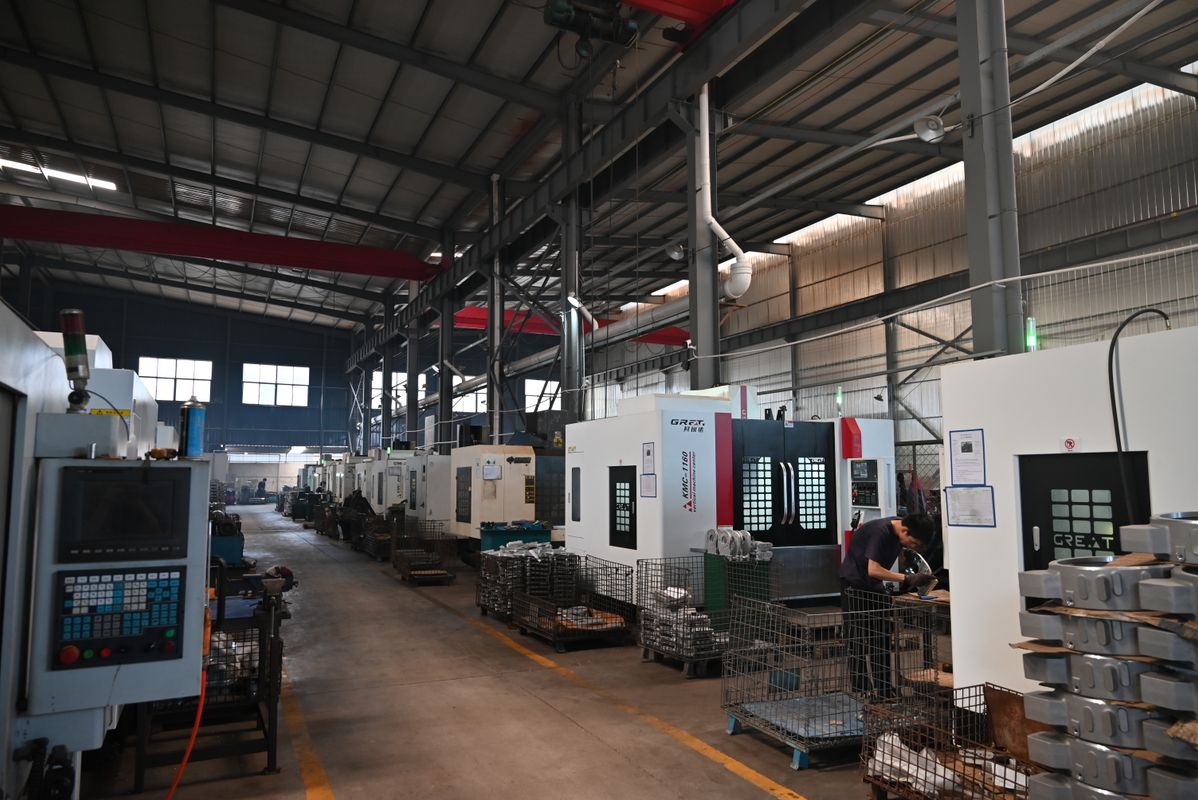
Factory evidence
Evidence buyers can verify before releasing a custom aluminum casting order
Ningbo Bohua Mechanical Parts Co., Ltd. operates an NQA-certified IATF 16949 quality system. The current certificate covers manufacturing of aluminum alloy cast parts and is valid through 2027-11-20.
Capability does not mean every inspection method is automatically included. The drawing, CTQs, sampling level, records, and acceptance criteria must be agreed in the RFQ and control plan.
Drawing to evidence
Define the record before comparing supplier quotes
| Checkpoint | Bohua capability evidence | Buyer must define |
|---|---|---|
| Material identity | Oxford OES and project material certificates | Alloy designation, temper, governing standard, and certificate format |
| Internal soundness | Unicomp UNC-160 and Y.MU2000-D X-ray capability | Critical zones, inspection frequency, and acceptance reference |
| Dimensional approval | Hexagon Global S and NANO Metrology CMM capability | Datums, CTQs, sampling plan, and report layout |
| Pressure tightness | Dedicated pressure-tightness testing workshop | Medium, pressure, hold time, allowable leakage, and test stage |
| Submission package | PPAP documentation can be provided up to Level 5 according to project requirements. Heat/serial traceability. | PPAP level, FAI scope, retention period, and change-control requirements |
Buyer checklist
What to include so the quote is real
• 2D + 3D drawing, alloy target, annual volume, and destination market
• Machining scope, critical datums, and whether the supplier owns CNC or outsources it
• Tooling status: new tool, tool transfer, or quoting from an existing program
• Lead-time target for tooling, T1, validation, and first serial shipment
• Inspection package: CMM, X-ray, leak test, pressure hold, PPAP, or capability study
• Commercial route: direct email, WhatsApp, NDA-first review, and quotation owner on the supplier side
Commercial comparison
Questions that separate a serious quote from a placeholder quote
| Tooling quote | Ask what is included: mold body, cores, inserts, correction loop, fixtures, and sample support. A low number with weak scope is not a better supplier. |
|---|---|
| MOQ logic | MOQ should connect to tooling recovery, setup burden, and machining route. An unclear MOQ needs clarification; it is not enough evidence to judge a supplier. |
| Lead time | A serious lead time should include tooling, first samples, correction, machining validation, and export packing - not just the first visible casting. |
| Testing / inspection | Leak test, X-ray, CMM, bearing-seat checks, and other outputs should be quoted at the RFQ stage when they affect cost and launch timing. |
| Supplier maturity | Better suppliers explain what they still need from the buyer, what risks remain open, and which assumptions can change the quote later. |
Related manufacturing guides
Review the manufacturing scope before requesting a quote
Pump housing manufacturer
Review the manufacturing requirements for your part and include the relevant scope in your RFQ.
View manufacturing guide →Valve body manufacturer
Review the manufacturing requirements for your part and include the relevant scope in your RFQ.
View manufacturing guide →Gearbox housing manufacturer
Review the manufacturing requirements for your part and include the relevant scope in your RFQ.
View manufacturing guide →EV motor housing manufacturer
Review the manufacturing requirements for your part and include the relevant scope in your RFQ.
View manufacturing guide →FAQ
Questions about preparing your quotation request
What is the fastest way to compare China casting suppliers?
Use the same RFQ package for every supplier and compare their assumptions on tooling, MOQ, lead time, machining, and testing instead of comparing only piece price.
Why do two suppliers give very different MOQ or tooling answers for the same drawing?
Because they may be assuming different process routes, machining scopes, correction loops, or risk buffers. A good comparison forces those assumptions into the open.
What should I review before comparing supplier quotations?
First check that the proposed manufacturing route fits your part and requirements. Then compare suppliers against the same tooling, machining, inspection, and delivery scope.
Ready to request a quotation?
Send the drawing package, commercial assumptions, and contact path through the RFQ form so the quote can move faster from evaluation to action.
Send RFQ / contact engineeringComparable decision method
Score every China casting quote on the same 1–5 scale
Score the written response, not the supplier's marketing polish. Use the same RFQ package and the same evidence request for every candidate. A high total cannot cancel a critical drawing, quality, or scope failure; procurement should keep those decision gates separate.
Missing, contradictory, or based on an unstated assumption
Partly answered, but important scope or ownership is still unclear
Stated clearly, with supporting evidence or final confirmation still pending
Complete and aligned to the RFQ, with a credible evidence path and named owner
Complete, revision-controlled, comparable, and supported by the requested evidence
| Score area | What to review in every quote | Score |
|---|---|---|
| RFQ and revision fit | Drawing revision, model, material, annual volume, destination, and buyer requirements match the issued RFQ package. | 1 / 2 / 3 / 4 / 5 |
| Tooling and sample scope | Tool body, cores, inserts, fixtures, ownership, first samples, correction loops, and approval gates are included or excluded explicitly. | 1 / 2 / 3 / 4 / 5 |
| Finished-part scope | Casting, heat treatment, CNC machining, finishing, inspection, packaging, and logistics assumptions can be compared line by line. | 1 / 2 / 3 / 4 / 5 |
| Quality and validation | Material, dimensional, leak, radiography, FAI, PPAP, traceability, and acceptance records are tied to the drawing and buyer risk. | 1 / 2 / 3 / 4 / 5 |
| Commercial clarity | Unit price, MOQ, Incoterm, payment terms, quote validity, schedule dependencies, and exclusions are visible. | 1 / 2 / 3 / 4 / 5 |
| Communication and project support | The supplier identifies unknowns, asks useful technical questions, names owners and next steps, and protects revision control. | 1 / 2 / 3 / 4 / 5 |
| Risk disclosure | Open process, tooling, machining, quality, or timing risks are stated before award instead of being hidden behind a fast quote. | 1 / 2 / 3 / 4 / 5 |
Project-risk signal
Compare communication quality, not reply speed alone
A useful response confirms the revision, answers each RFQ field, labels assumptions, raises drawing or process questions, and gives an owner and next step. A fast price with no technical questions may simply hide missing scope.
- • Does the response resolve questions instead of only acknowledging them?
- • Are technical and commercial assumptions kept in one revision-controlled record?
- • Are open risks, exclusions, approval owners, and due actions visible?
- • Can engineering and procurement understand the same quotation without separate interpretations?
Fair comparison rule
Send every supplier the same follow-up questions
Record each answer beside the original quotation. If an answer changes scope or price, request a revised quote rather than relying on an email assumption.
- 1.Which drawing and model revision did you quote?
- 2.Which annual volume, release quantity, and first-order quantity did you assume?
- 3.What is included in tooling, fixtures, first samples, and tooling-correction support?
- 4.Does the unit price cover casting only or the complete machined and finished part?
- 5.Which heat treatment, coating, inspection, documentation, packing, and freight items are included?
- 6.Which CMM, material, leak-test, radiography, FAI, PPAP, or traceability records are priced?
- 7.What MOQ, Incoterm, payment, quote-validity, and currency assumptions apply?
- 8.Which buyer decisions or missing files can change the price or schedule?
- 9.What is specifically excluded from the quotation?
- 10.Who owns the next action, and what must be approved before tooling or sampling starts?