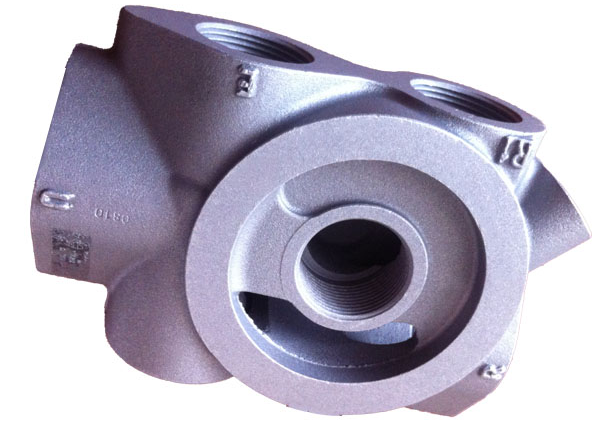
Flow-Control Castings

Valve Body Manufacturer for Hydraulic, Pneumatic, and Flow-Control RFQs

Source aluminum valve bodies from a China manufacturer that understands pressure integrity, machined ports, sealing faces, and export-ready OEM execution.

This commercial page is designed for buyers searching valve body manufacturer, valve body supplier, OEM valve body, and valve body RFQ intent. The goal is to move visitors from comparison research to a usable inquiry path.

Quick answer for buyers

Bohua supports aluminum valve body and valve housing RFQs where pressure integrity, machined ports, sealing faces, and inspection planning need to be reviewed before quotation. Send drawings, pressure or leak requirements, port details, alloy and annual volume for engineering review.

Buyer facts

LocationNingbo, Zhejiang, China
Process optionsGravity casting and low-pressure casting reviewed against valve-body geometry, sealing paths, and RFQ acceptance criteria
Common alloysA356-T6 or ZL114 are often reviewed for gravity-cast valve bodies; ADC12 is considered only when the application suits HPDC
Secondary operationsCNC machining of ports, threads, bores, sealing faces, and datums
RFQ inputs2D + 3D drawings, port layout, pressure or leak target, alloy, machining scope, annual volume, inspection package
Process fitGravity or low-pressure casting should be selected against wall transitions, sealing-path risk, machining stock, and buyer acceptance criteria
Quality evidenceInspection planning can cover thread gauge verification, sealing-face flatness and Ra, CMM datum scheme, pressure or leak-test parameters, and documentation package per OEM approval scope
Export executionIncoterm, machined-surface protection, port plugging, VCI use, and record package should be confirmed in the RFQ before shipment planning

Why buyers land here

Commercial path from supplier search to inquiry

Hydraulic valve bodies, pneumatic control housings, manifolds, vacuum and fluid-control aluminum castings

A356-T6 gravity casting for pressure-bearing valve body programs
CNC machining on threaded ports, bores, sealing lands, grooves, and datum faces
Drawing review around porosity-sensitive areas before tooling and fixtures are frozen
Export-ready support for OEM, aftermarket, and private-label sourcing teams

Buyer CTA

Need a valve body supplier in China?

Send your drawings, pressure rating, machining list, and annual volume through /contact for a structured OEM quotation.

• Share 2D/3D files, annual demand, alloy target, and machining scope

• Add leak, bearing, sealing, or coating requirements where relevant

• Bohua reviews OEM, supplier, and export-ready assumptions before tooling

Go to contact →

Core selling points

What procurement teams usually need to verify

Pressure-oriented quality planning

We review port layout, sealing surfaces, and leak-risk areas before quoting only on weight.

Machining-aware quoting

Valve body cost depends on datums, threads, bores, and sequence control, not just casting price.

Commercial clarity for RFQs

Tooling, samples, inspection outputs, and export delivery assumptions stay visible from the start.

Comparison intent

How buyers usually compare China suppliers before RFQ

Leak-risk control

Bohua approach

Sealing lands, fluid-path wall sections, and leak-test intent are reviewed before sample launch.

Typical market gap

Supplier focuses on part weight first and answers leak questions after the quote is accepted.

Threads and ports

Bohua approach

RFQ review checks threaded ports, bore relationships, datum faces, and likely machining sequence.

Typical market gap

Threads and sealing surfaces are treated like secondary details until machining starts.

Quote maturity

Bohua approach

MOQ, lead time, tooling, and inspection outputs are discussed as part of one commercial package.

Typical market gap

Commercial terms are fragmented, making supplier comparison harder for OEM buyers.

RFQ risk review

Valve body RFQ risk review

Common risk areas Bohua reviews before issuing a valve body quotation. Buyers who address these in the RFQ reduce the chance of post-sample rework or re-tooling.

Port misalignment relative to machining datum or assembly interface
Machining datum conflict where the drawing datum scheme cannot be held in the same fixture sequence
Porosity near sealing path: gas or shrinkage voids in the wall between pressure bore and external face
Thread or plug gauge requirement not specified in the RFQ, leading to tooling and inspection surprises
Pressure-test acceptance criteria undefined at RFQ stage, causing rejection-criteria disputes after samples

RFQ micro-conversion

Start a valve body RFQ with the details procurement actually needs

This block is designed for buyers comparing valve body suppliers and trying to avoid under-scoped quotes. Use it to send the commercial and technical inputs that usually decide whether the price is real.

Drawing / spec: include ports, threads, bores, sealing lands, and datum callouts.
Material: A356-T6 target or note if alloy recommendation is still open.
Quantity / MOQ: include sample quantity, pilot demand, and annual run-rate target.
Tooling + lead time: state whether the valve body is a new tool, a transfer, or a re-quote with existing fixtures.
Testing / contact path: include pressure standard, gauge expectation, X-ray / CMM request, and fastest contact channel.

Fastest contact path

Pre-filled quote route to /contact

Open a pre-filled RFQ draft with drawing/spec, material, MOQ, tooling, lead time, testing, and contact-path prompts already staged in the form.

Drawing / spec, material, and machining scope are pre-structured for faster internal review.
MOQ, tooling, lead time, and testing prompts reduce vague inquiries and speed up quote maturity.
Urgent projects can switch from form to direct email or WhatsApp without losing the RFQ logic.

RFQ checklist

What to send if you want a serious quotation

3D + 2D drawing with ports, threads, bores, sealing lands, and datum callouts

Working pressure, leak-test expectation, medium type, and reject criteria

Thread standard, machining scope, and inspection method for critical features

Annual demand, MOQ expectation, and launch timing for tooling and samples

Packaging, documentation, and export terms needed for OEM approval

Send RFQ package →

Pricing / MOQ / lead time / tooling / testing

Commercial questions procurement teams ask before supplier approval

Pricing logicQuoted from casting + machining complexity, port/thread count, sealing control, and expected inspection output.
MOQMOQ depends on tooling route, valve body size, machining content, and whether the order is prototype, pilot, or serial.
Lead timeLead-time review covers tooling, sample machining, buyer-defined leak or pressure validation, and any port-thread gauge preparation.
ToolingTooling review looks at shrink-risk zones, machining allowance, fixture access, and correction loop after first samples.
Testing intentPressure or leak-test checkpoints are aligned with sealing faces, ports, functional bores, and buyer acceptance criteria before SOP.

FAQ

Questions buyers usually ask before contacting a manufacturer

Why is machining capability critical on valve body projects?

Because valve bodies depend on machined ports, threads, bores, and sealing surfaces. A weak machining plan can ruin an otherwise acceptable casting.

What alloy is common for aluminum valve body programs?

A356-T6 is often discussed for medium-volume gravity-cast valve bodies because it balances structural performance, corrosion resistance, and machining behavior.

Can I send one RFQ for multiple flow-control castings?

Yes. Buyers often bundle valve bodies, pump-related housings, and adjacent fluid components into one sourcing package.

What information should a valve body RFQ include?

A complete valve body RFQ should include 2D and 3D drawings with ports, threads, bores, sealing lands, and datum callouts; working pressure or leak-test target and acceptance criteria; thread standard and machining scope; annual volume and launch timing; and any documentation or inspection package required for OEM approval.

Can Bohua quote casting and machining together?

Yes. Bohua can review and quote casting, CNC machining of ports, threads, bores, and sealing faces, and inspection planning as part of one coordinated submission. Bundling casting and machining in the same RFQ allows machining datums, sealing-surface tolerances, and port geometry to be reviewed before tooling is finalized.

How are pressure-sensitive sealing areas reviewed?

Sealing lands, port faces, and bore-to-seal interfaces are reviewed against the drawing before tooling. We assess the likely casting route, machining allowance, and porosity-sensitive zones near sealing paths. Pressure and leak-test method can be aligned with buyer acceptance criteria before sample launch so results are not a surprise.

What inspection requirements should buyers specify?

Buyers should specify: thread gauge standard, sealing-face flatness and surface finish, CMM datum scheme and GD&T callouts, pressure or leak-test parameters and acceptance criteria, and whether dimensional reports, material certs, or traceability documents are required for program approval.

When is low-pressure casting worth reviewing for valve bodies?

Low-pressure casting is worth reviewing when the valve body has complex internal passages, thin-to-thick transitions near sealing paths, or serial-volume requirements that benefit from more controlled fill and consistent metallurgy. For simpler geometries or lower volumes, gravity casting typically offers adequate porosity control at lower tooling cost. Both options can be evaluated against the drawing and pressure requirement at the RFQ stage.

Ningbo Bohua Mechanical Parts Co., Ltd.✉️ [email protected]💬 WhatsApp: +852 9131 3825Direct engineering follow-up available
Get Quote →

Ready to move from supplier search to a real RFQ?

Send your drawings, machining notes, annual usage, and delivery target. Bohua will review the project as a manufacturer and supplier, not just a catalog page.