Ningbo Bohua Mechanical Parts Co., Ltd. · Linda, Export Sales · linda@ningbobohua.com · www.bohua-casting.com
Engineering guide
Worm Gear Reducer Housing Casting by Frame Size and Annual Volume
For an NMRV-style worm gear reducer housing, quote die casting for a compact open shell with steady demand. Compare gravity casting for deeper frames or less certain releases. There is no universal annual volume cutoff. Use the actual die envelope and the cost per accepted housing, including bearing bore machining.
On this page
When should an NMRV-style housing be die cast or gravity cast?
Quote die casting for a compact, open housing with steady demand and a die that fits the press. Quote gravity casting for deeper cases, heavier bearing supports, or programs that need a simpler tool. Use the casting drawing and annual demand together. A frame designation by itself leaves the press fit and finished cost unanswered.
| Hypothetical housing and longest span, mm (in) | Accepted housings per year | Route to quote first | What may change the decision |
|---|---|---|---|
| Open shell with accessible bearing bosses, 100 (3.94) | 24,000, steady releases | Die casting. Request a gravity comparison at the same delivery scope. | Projected area of cavities and feed system, slide travel, and finishing time per housing. |
| The same 100 (3.94) shell with smaller releases | 1,200, uncertain repeat demand | Gravity casting. Compare sand casting if the forecast cannot support permanent tooling. | Existing tool availability, machining stock, and repeat order size. |
| Deep oil case with a long bearing support, 180 (7.09) | 6,000, repeat releases | Tilt-pour gravity casting. Quote die casting if the die can release the shape and the design can support it. | Core or slide access, feeding around the bearing support, and alignment after machining. |
| Wide case with offset bearing supports, 300 (11.81) | 18,000, steady releases | Compare gravity and low-pressure casting if the die exceeds the available press envelope. | Actual fit, part weight, and quality at the heavy sections. Consider sand if permanent tooling is unsuitable. |
The sizes and volumes illustrate how to screen a quote. They are hypothetical housing spans and purchasing scenarios. Ask for the projected area at the die split, the overall die envelope, slide travel, and shot capacity. A short but wide case with several cavities may need more closing force than a longer case cast in a single cavity.
See the die-casting process page for machine and tool inputs. The gravity casting versus die casting comparison explains the broader process differences.
Sources for tooling and size constraints: European Aluminium, Aluminium Automotive Manual, Design for Cost Optimization, version 2011, p. 43, and North American Die Casting Association, Frequently Asked Questions, undated.
How do you hold worm and wheel bearing bores?
Define each shaft axis from its bearing seats. Then control the relationship between the axes. Bore diameter sets the fit at each bearing. Specify the shortest distance between the worm and wheel axes and their shaft angle. Those controls locate the gearset for mesh. Verify them as well as the size and form of each bearing seat.
| Feature | Why it matters | How to verify it |
|---|---|---|
| Opposed seats for the worm shaft | Seat size and form control fit. The seat centers establish the shaft axis. | Measure the diameter and specified form. Inspect both seats in a shared coordinate system. |
| Worm and wheel axes | Their spacing and angle affect tooth contact and assembly. | Define the axes, datum references, and the distance and angle to report. Agree which cylindrical surfaces the measurement uses. |
| Wheel bearing shoulders and cover register | They locate the wheel and cover during assembly. | Check shoulder depth and face orientation. If a detachable cover locates a bearing, define the assembly and fastening condition for inspection. |
| Seal bore and oil joint | The shaft seal and cover joint retain lubricant. | Specify bore finish, lead-in geometry, face finish, and any oil retention test for the completed assembly. |
For opposed seats on the same axis, check whether both can be finished from one setup. When the machining setup changes between the worm and wheel bores, locate the housing from the same functional datum system. Make sure a rib or internal stop cannot block a boring bar or probe. If the cover carries a bearing seat, specify the cover locator and fastening condition on the assembly drawing. Identify the corresponding features on the CMM report and require the same assembly condition for repeat inspections.
Set the bore diameter tolerance from the bearing fit and duty. Specify form and location separately where they control function. Agree how the shop will measure thin sections after fixture pressure is released. Use the CMM inspection guide for cast parts to specify the report and setup. For other housing forms, see the gearbox housing manufacturing page.
For worm mesh geometry, see ISO 10828:2024, Worm Gears — Worm Profiles and Gear Mesh Geometry. For drawing controls, see ASME Y14.5-2018 (R2024), Dimensioning and Tolerancing.
At what annual volume does die casting pay back its tool?
Calculate the break-even from two finished-part quotes that meet the same drawing. Use the extra fixed cost of the die route divided by its recurring savings per accepted housing. If the die route offers no recurring savings, a higher upfront investment cannot pay back through volume alone.
For example, imagine a compact frame with a three-year production plan. Assume the extra fixed cost of the die route equals the recurring savings on 36,000 accepted housings. Break-even over three years is 36,000 ÷ 3 = 12,000 accepted housings per year with level demand. At 8,000 per year, the program totals 24,000 accepted housings. That is 12,000 short of break-even. The volume and program length are hypothetical.
Count finished demand that actually uses the tool. A single housing may serve several ratios if the same bearing positions, cover interfaces, and lubrication requirements apply. Combine those releases only after verifying the shared drawing and revision. The same frame designation can appear with different flanges, mounting feet, or seal arrangements. Those differences can change the blank or require separate operations.
Ask whether a second cavity lowers the recurring cost after factoring in trimming, bore machining, and inspection. It also changes the tool cost and press requirement. Compare expected tool service, insert changes, changeovers, and the delivery bottleneck. If bore machining sets the shipment rate, faster casting alone does little for the next release. Run the comparison again at a lower demand forecast and with any separate allowance for replacement tooling.
What belongs in a worm reducer housing RFQ?
Request quotes against the finished housing drawing and the release plan for that casting. Include a solid model and a section through both shafts. Identify the mating cover, motor pilot, mounting faces, and bearing shoulders. If the final housing is assembled from multiple pieces, assign which pieces go into dimensional and sealing verification.
- Define the functional geometry. Identify the worm and wheel axes, center distance, shaft angle, cover register, and reference surfaces. State fit, form, and location requirements on the drawing.
- Define the machining and inspection scope. Mark the finished features. Specify how to measure the paired bores and identify any lubricant boundary. If the assembly uses a vent, set the casting and assembly test boundaries separately.
- Define demand by frame and casting drawing. Give yearly accepted quantities, batch releases, service demand, and program length. Identify which finished parts could share one rough casting.
- Ask for comparable route options. Get the tool type, cavity layout, machining sequence, inspection record, and maintenance plan for each route. Compare them at the same release quantity and delivery state.
Send your reducer housing drawing for a free drawing review. Include drawings for the mating cover and the locating interfaces.
U.S. duty can differ substantially between machine parts and other aluminum articles under heading 7616, so see the U.S. aluminum casting tariff guide and have a customs broker check each part.
At Bohua
Bohua offers free drawing review for aluminum worm reducer housings. Send the frame layout, bearing fit, and annual demand so we can recommend a route and suggest changes to the casting design.
Tooling, bore machining, and inspection
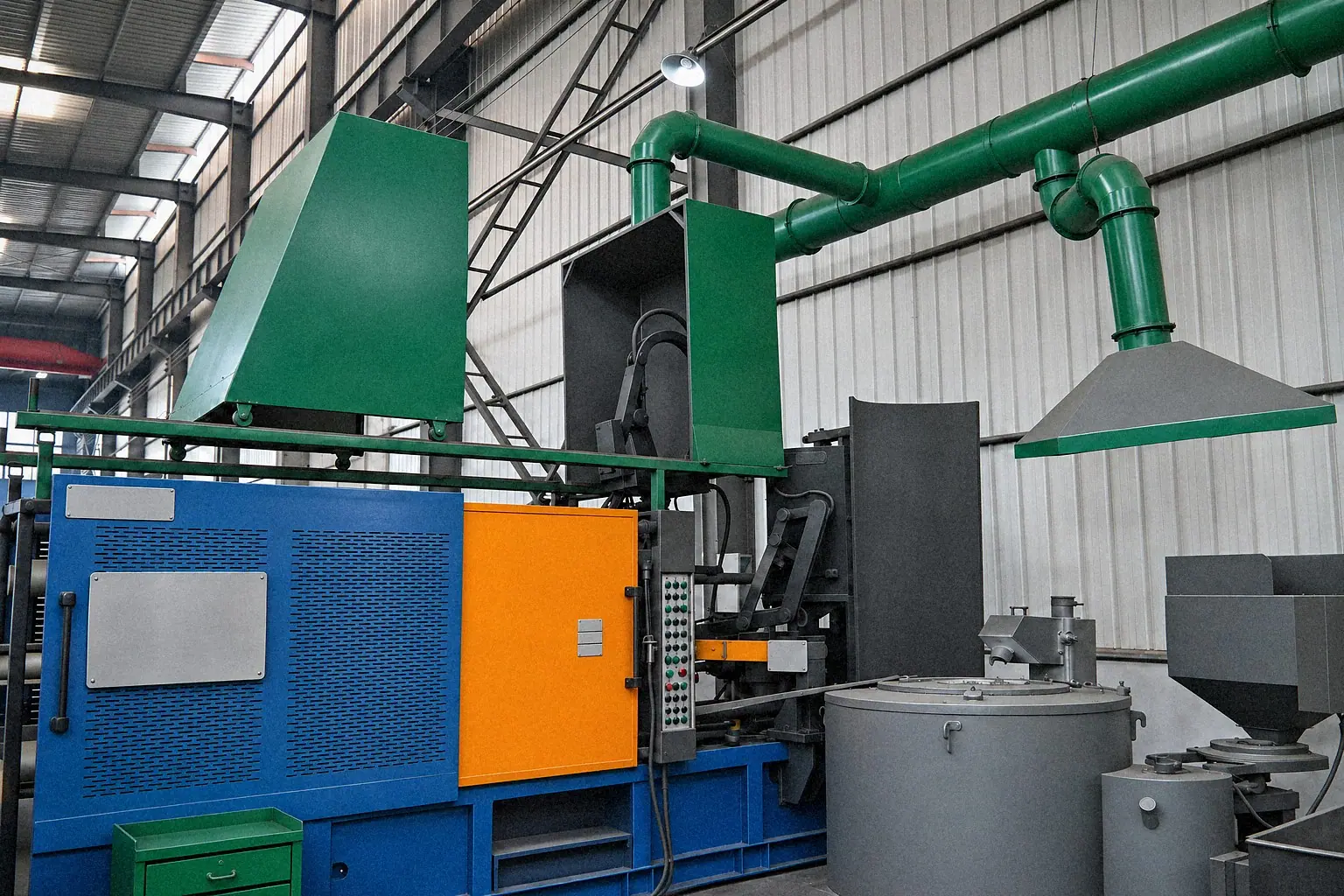
We run in-house gravity casting including tilt pour, low-pressure casting, sand casting, and die casting on two machines rated at 280 t and 450 t. Die casting is for small and midsize parts that fit the tool and press. We evaluate larger housings for gravity, tilt pour, low pressure, or sand casting. Gravity and tilt-pour castings use A356 and ZL114.
We make molds in-house. Our mold life estimates are about 20,000–50,000 shots for GB 45 carbon steel and about 100,000 shots for H13 with prescribed maintenance. The part's tool wear and intended production run guide the choice.
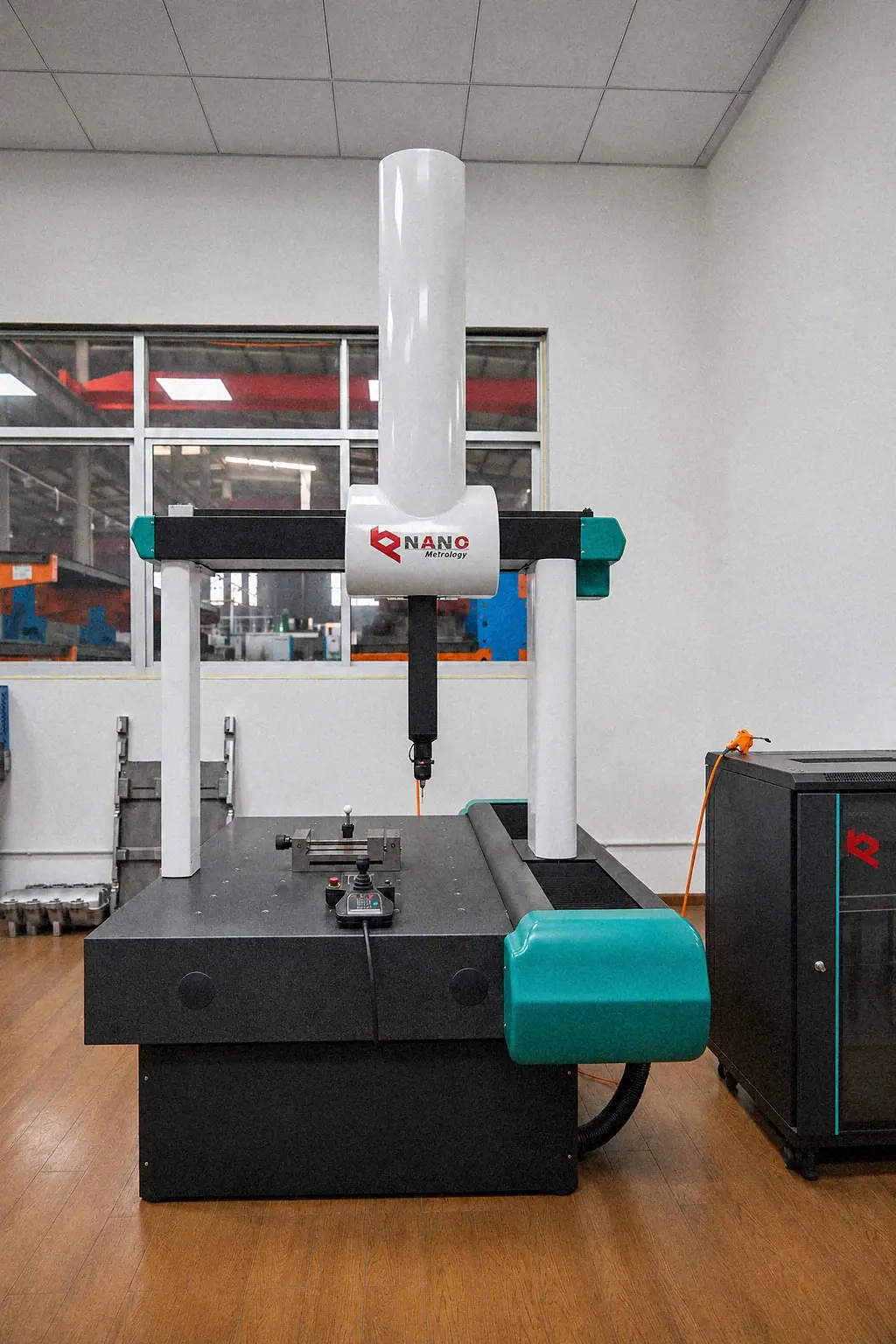
We can hold selected critical machined dimensions to ±0.02 mm, the machining limit; ±0.005 mm work is outside the capability. The rounded inch equivalents are ±0.0008 in and ±0.0002 in, respectively. We have coordinate measuring machines. Bore size, form, and alignment each need their own drawing controls.
CNC machining and casting leak checks take place at the same site. We check casting leaks by air-under-water immersion at 3 bar or more. The drawing governs the part's own test pressure.
Worm gear reducer housing casting questions
Use the frame size to organize the drawings, then compare feasible routes by finished geometry and accepted annual demand.
Does the NMRV frame number determine press tonnage?
No. Use the actual projected area, molding layout, and total shot. Confirm the overall die dimensions and side movements with the shop.
Can a single housing blank support several ratios?
Yes, if the gearsets share the required axis geometry and the blank supports every finished interface. Verify the bore and seal requirements for each version.
Can a bore size check confirm the worm and wheel mesh?
No. Measure the axes and the specified center distance and orientation as well. Verify mesh performance in the assembled reducer under the product maker's validation plan.
Must every oil-retaining casting get the same test pressure?
No. Use the test conditions on the part drawing. A vented assembled case and a bare casting can need different fixtures and acceptance checks.
Send your reducer housing drawing for a free drawing review
Include both shaft axes, the bearing fits, the annual forecast, and the mating cover drawing. Submit the RFQ details, then email your drawing for review.
Send your drawing →