Ningbo Bohua Mechanical Parts Co., Ltd. · Linda, Export Sales · linda@ningbobohua.com · www.bohua-casting.com
Application
Aluminum Castings for Agricultural and Construction Equipment
Quote die casting for compact forklift and AGV drive covers with steady demand. Compare tilt-pour gravity casting for deeper agricultural transaxle cases and sand casting for bulky housings with uncertain releases. Use the installed oil boundary, bearing datums, and peak release to compare finished parts.
Which casting process fits your equipment housing?
Quote die casting for a compact drive cover that fits the die and press. For a deeper oil-retaining transaxle case, compare tilt-pour gravity casting with sand casting. Check how the housing locates the drive components and seals in the installed assembly.
| Part | Route to quote | Check before tooling |
|---|---|---|
| Electric forklift motor or drive cover | Die casting for compact, open shapes at stable demand. Gravity casting for deeper or heavier sections. | Die envelope and clamping force. Check pilot locations, cover flatness, and the specified temper. |
| Drive unit housing for an automated guided vehicle (AGV) or autonomous mobile robot (AMR) | Die casting for a repeat, compact wheel drive. Tilt-pour gravity casting for a case with more demanding sections or a supported sand core. | Wheel-side bearing reference, motor register, and mounting face in the installed orientation. |
| Lawn or farm equipment transaxle and transmission case | Compare die casting for a compact open shell with tilt pour for a deeper case. Quote sand casting for a bulky case with uncertain releases. | Oil level, split line, shaft seals, vents, and any isolated chambers. |
| Construction equipment pump housing | Tilt pour or low-pressure casting where feeding and a cored passage drive the choice. | Port access, wall around the passage, and the finished pressure boundary. |
| Axle case, transmission cover, or mounting bracket | Gravity casting for repeat orders. Sand casting for a large envelope or geometry that needs a flexible mold layout. | Mounting loads, tool access, and finishing stock at the pads and registers. |
See the tilt-pour gravity casting process and sand casting process for the tooling inputs each route needs. For a case that locates both shafts, see the gearbox housing manufacturing page.
Which surfaces need sealing and leak checks?
Identify the fluid and its boundary on a section view. A dry motor shell, a vented oil case, and a pressurized pump body require different checks. For a transaxle, show the shaft seal seats, mating faces, drain and fill threads, and the vent location. Specify whether the test fixture closes the vent and how it seals the shaft openings.
| Function | Details to put on the drawing or test plan |
|---|---|
| Dry cover or bracket | Define fit and structural interfaces. Specify a sealing check if the enclosure has an ingress requirement. |
| Oil-retaining case | Identify the gasket land, sealing bores, plugs, and any chambers that must stay isolated. State whether the casting or assembled case is tested. |
| Pressurized pump cavity | Specify the medium, pressure, observation or hold time, and pass criterion. Identify which ports the fixture blocks and which adjacent spaces it monitors. |
If a cut exposes a new surface at the fluid boundary, specify a leak check after machining. An immersion check can locate a casting leak. A quantitative leak-rate limit requires an agreed measurement method. See the leak-tight aluminum casting page for the requirements to send.
Source for the distinction between bubble detection and leak-rate measurement: ASTM E515-11(2022), Sections 6.1 and 6.3.
Can a multicavity tool cover the busy season?
Compare the casting plan with the release schedule and the finishing schedule. The same annual order can be easy to spread over the year or difficult to deliver before equipment assembly starts. Ask for accepted castings, machined parts, and tested parts per release window.
| Tool layout | Accepted covers needed before the busy season | Minimum shots for the release |
|---|---|---|
| One cavity | 4,800 | 4,800 ÷ 1 = 4,800 |
| Two cavities | 4,800 | 4,800 ÷ 2 = 2,400 |
The example assumes every cavity supplies an accepted cover on every shot. Budget setup shots, samples, and rejects separately. The peak release is 4,800 ÷ 12,000 = 40% of annual demand. Either tool leaves 4,800 covers to machine and inspect in that window.
Ask for the cycle time with both cavities running. Check how the supplier identifies each cavity in the inspection records. Confirm die fit, machining fixture capacity, and test time before approving the extra cavity. For a large case ordered in staggered batches, a sand or permanent mold quote with a workable machining plan may suit the release schedule better.
Source for comparing tooling against production quantity and component size: European Aluminium, Aluminium Automotive Manual, Design for Cost Optimization, version 2011, p. 43.
At Bohua
Bohua reviews equipment drawings free of charge. We use the installed function, release forecast, and sealing requirements to propose a casting route and suggest drawing changes.
Casting and finishing for repeat orders
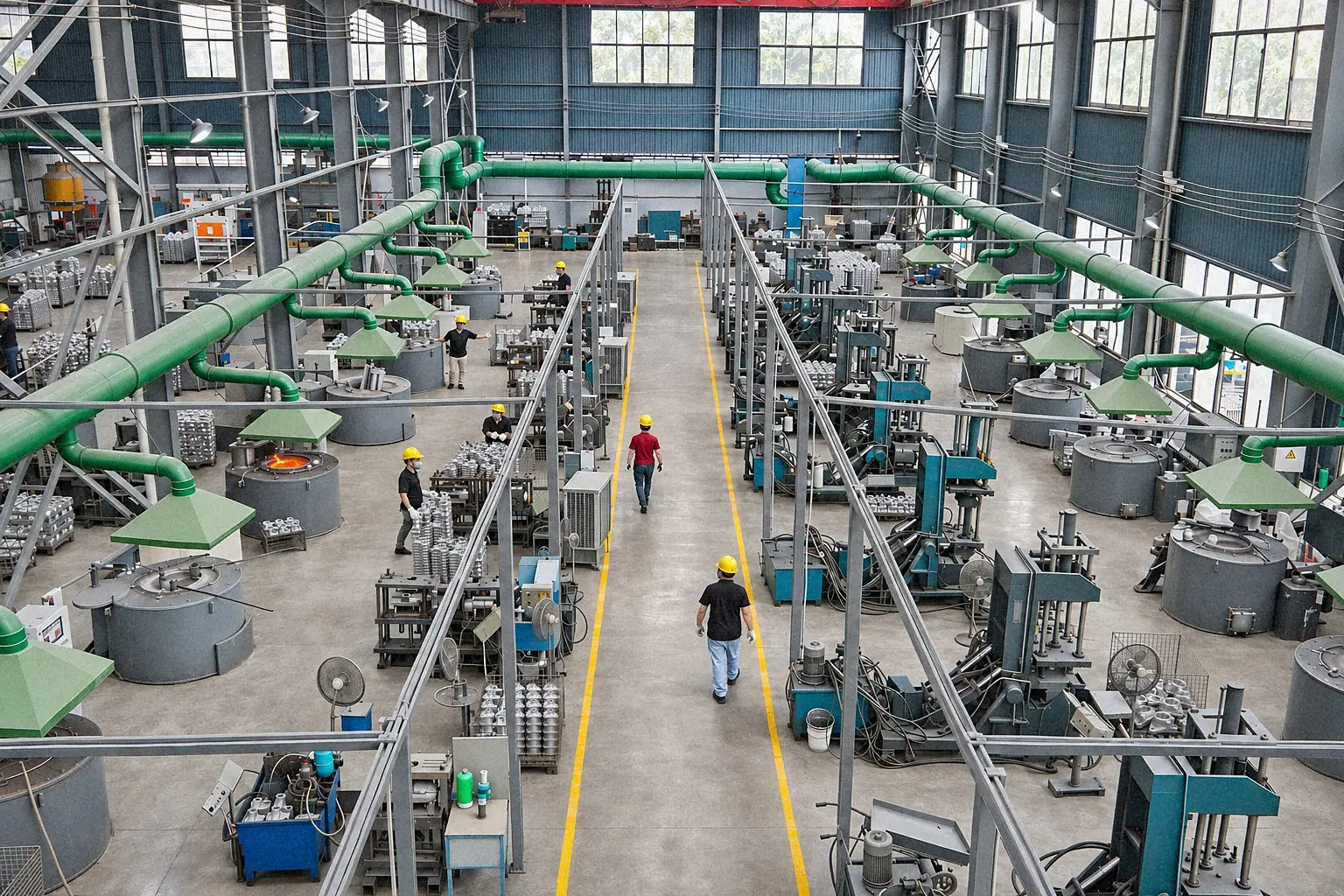
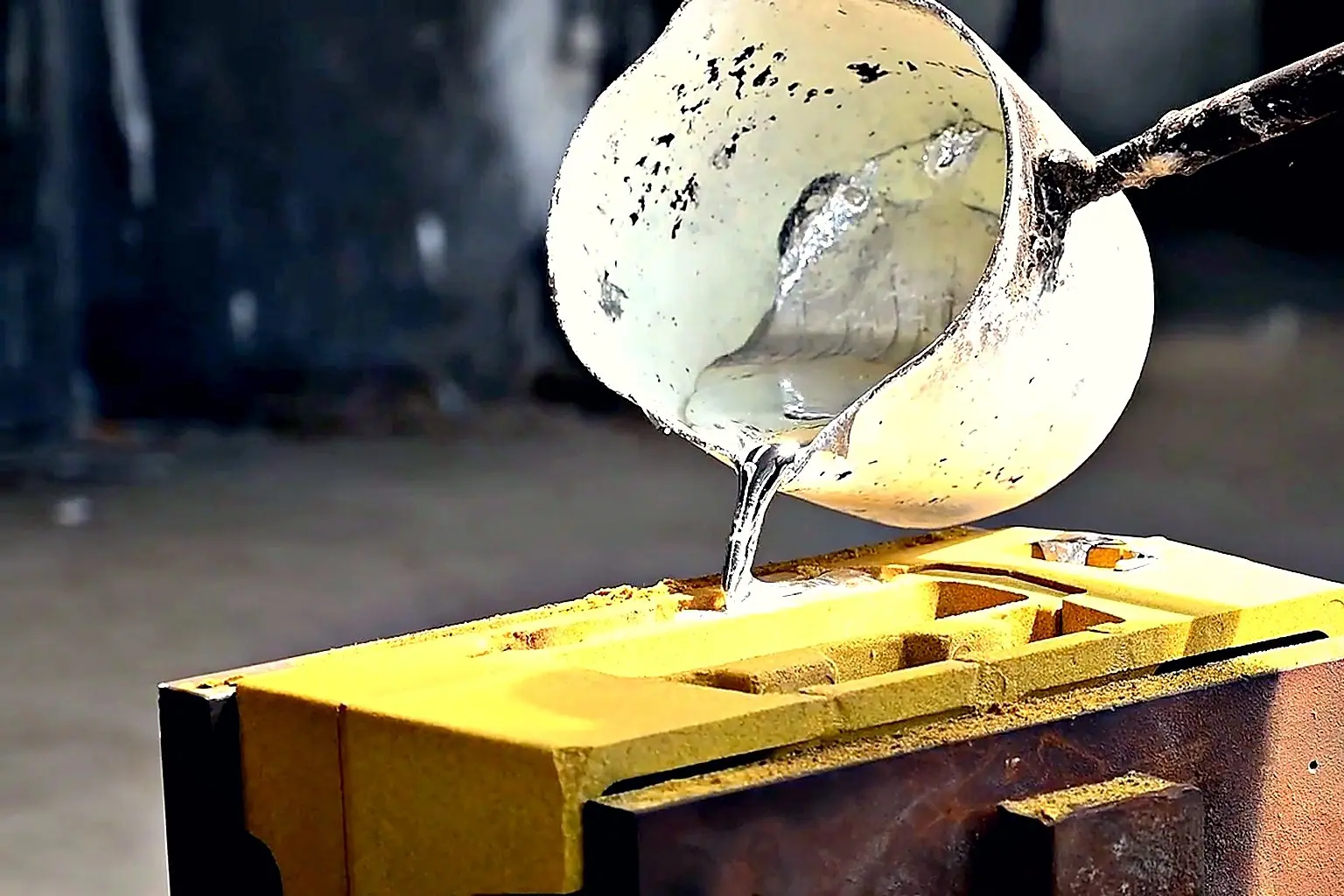
We run in-house gravity casting including tilt pour, low-pressure casting, sand casting, and die casting on two machines rated at 280 t and 450 t. Die casting is for small and midsize parts that fit the die and press. For a larger housing, we assess gravity, tilt-pour, low-pressure, or sand casting. Parts outside the feasible range of those routes are outside our scope.
We build molds in-house. Our mold life estimates are about 20,000–50,000 shots for GB 45 carbon steel and about 100,000 shots for H13 with prescribed maintenance. The steel choice depends on tool wear and the cost for the program.
Machining and casting leak checks take place at the same site. We check casting leaks by air-under-water immersion at 3 bar or more. Use the drawing to specify the part's own test pressure.
What should the housing drawing and RFQ include?
Send the drawing, model, and equipment assembly section. Mark the installed oil level or fluid boundary, mounting datums, and bearing and seal interfaces. Specify alloy, temper, delivery condition, and the drawing revision. For an oil case, mark the shaft openings and the vent on the same section. Identify the plugs supplied with the casting and the temporary closures supplied by the test fixture. List the machined faces and the checks that apply after machining. Put annual quantities by drawing, seasonal releases, and the expected program life in the RFQ. Compare tooling and recurring cost on the same machined and inspected delivery scope.
Send your housing drawing for a free drawing review. Include the next release quantity and when it is needed.
U.S. duty can differ substantially between machine parts and other aluminum articles under heading 7616, so see the U.S. aluminum casting tariff guide and ask your customs broker to classify and check duties for each part.
Equipment housing casting questions
Choose the route after checking the geometry, finished interfaces, and release schedule for each drawing.
Can a forklift motor housing and cover use different casting routes?
Yes. Quote each geometry on its own. Use the same released register and fastener interface for both parts so the assembled fit can be checked.
Can a vented transaxle be checked for casting leaks?
Yes. Define which openings the fixture seals and what it monitors. Set a casting test condition suited to that boundary and a separate assembled performance check if needed.
Is a large agricultural transmission cover automatically a sand casting?
No. Check size, section geometry, and repeat demand against a gravity mold as well. Ask what changes each route needs at the mounting flange.
Should buyers group left and right drive housings in one mold?
It depends on the demand balance and die layout. A family mold can make sense when both sides ship together. Ask how the plan covers service demand if one side needs extra releases.
Send your housing drawing for a free drawing review
Include the equipment assembly section, annual demand, peak release, and finished sealing requirements. Submit the RFQ details, then email your drawing for review.
Send your drawing →