Ningbo Bohua Mechanical Parts Co., Ltd. · Linda, Export Sales · linda@ningbobohua.com · www.bohua-casting.com
Engineering guide
How to Source Aftermarket Thermostat Housing Castings as a Family
Source aftermarket thermostat housings by shared casting blank. Quote machining and leak checks for each finished variant. For repeat demand, compare a common gravity or tilt-pour mold with separate tools, then release tooling against the confirmed forecast for each casting blank.
On this page
- How should you group an aftermarket cooling catalog for casting?
- When can gravity casting and CNC machining share a blank?
- How many tools should an aftermarket brand release first?
- How should you leak-test each thermostat or pump housing?
- At Bohua
- What should go into a cooling family RFQ?
- Aftermarket coolant housing questions
How should you group an aftermarket cooling catalog for casting?
Group thermostat housings, coolant outlets, and water pump housings by cast geometry first. Keep the finished variants and vehicle applications linked to that map. Many fitment listings can point to one finished part. A single casting can also need separate machining for several finished variants.
| What the drawings show | Tooling option to quote | What must be verified |
|---|---|---|
| Same finished part across several applications | One finished drawing and one demand forecast for the part. | Fitment, thermostat function, flow connections, and installation clearance across every listed application. |
| Same cast shape and passages with different machined ports or bores | One permanent-mold blank with separate CNC operations. | Machining stock and remaining wall for each variant. Separate test and inspection plans where the interfaces differ. |
| Similar flange with a different passage or outlet angle | Quote a replaceable insert or core if the tool and feeding layout support it. Include an independent mold as an alternative. | Core support and removal, port orientation, and cooling path in each configuration. |
| Different pump volute, rotation, or electronics boundary | Separate casting review and tooling scope. | Impeller clearance, shaft or seal bores, coolant routing, and leakage into any dry compartment. |
| Uncertain service demand for a unique casting | Compare sand casting with a dedicated gravity mold before committing to tooling. | Whether the geometry, machining stock, and test plan can preserve the required fit and function. |
Keep the application list as a separate record. Fitment data ties a finished part to the vehicles it serves. Use released models and drawings to determine which parts share a casting. The Auto Care Association describes fitment data exchange in its Aftermarket Catalog Exchange Standard (ACES) 5.0 release. For the inputs on an individual part, see the coolant water outlet casting page.
When can gravity casting and CNC machining share a blank?
A shared tilt-pour gravity casting blank works when each released variant can use the same material, cast envelope, core geometry, and functional wall. Start with the most demanding cut. Verify stock on the thermostat seat, connector opening, or pump seal bore once the part is located in the fixture. Check the remaining wall at the least favorable location after that cut.
Choose a locating scheme that works across the family. A flange and locating holes can orient an outlet consistently for machining if those features exist on every blank. A machined variant may need a new fixture or a new orientation for tool access. Include fixture design, inspection programs, and any port-specific gauges in the scope of the shared blank quotation.
An insert may suit an external boss or local feature if it can be secured and replaced without disturbing the core location or seal land. A different internal flow path requires its own core review. A change in the outlet angle can move the passage, alter the wall beside a mounting hole, or prevent core cleanout. Ask for a section through the most crowded variant before accepting a proposal to share the tool.
A family mold casts different parts in one shot. A multicavity mold can also make several of the same blank per shot. Match the choice to the order mix. A family mold can create surplus when variants sell at different rates. A multicavity common blank lets you allocate stock at machining if the shared shape and the buyer's traceability rules allow it. Compare cavity identification and spare insert plans before choosing either layout.
Source for modeling the cast blank separately from machined features: European Aluminium, Aluminium Automotive Manual, Design for Cost Optimization, version 2011, p. 47.
How many tools should an aftermarket brand release first?
Authorize tooling from the forecast for each distinct blank. Rank the blanks by committed demand, fitment coverage, and engineering readiness. Reserve a separate approval for changes to ports, cores, and fixtures. That lets a wide catalog move forward while still proving interchangeability variant by variant.
| Finished drawings | Example demand | Action for tooling |
|---|---|---|
| 3 thermostat housing variants compatible with one blank | 900, 600, and 300 accepted units per year | Plan for at least 1,800 shared blanks per year before setup, approval samples, and manufacturing losses. Quote each machining variant at its own forecast. |
| 5 outlets with altered hose angles or passages | Demand forecast separately by drawing | Review the core layout and inserts before authorizing tooling. |
| 40 other released drawings across the catalog | Mixed service demand | Rank by committed releases. Review sand or dedicated gravity tooling for the drawings still awaiting a route. |
Suppose the first release calls for 300, 200, and 100 accepted machined housings. It needs at least 600 common blanks before losses, approval samples, and any required stock. If the first variant leads sales, allocate more common blanks to that variant at the next release. Check blank availability and variant-specific machining capacity before changing the mix. The counts illustrate a purchasing decision. They represent a hypothetical catalog, forecast, and order.
Ask each aftermarket thermostat housing supplier to quote tooling, cores, fixtures, machined parts, and acceptance tests on separate lines. Set a tool maintenance and ownership plan. If the tool has replaceable inserts, ask which spare inserts are included and how a change is recorded. For flexible releases, agree who holds blanks, how long revisions can stay in use, and how remaining stock is handled when a drawing changes.
Use the gravity casting tooling cost guide to separate the blank tool from the machining fixtures on your bid. Spread dedicated tooling across the accepted units it actually serves. Only pool the forecast where the same blank or fixture is genuinely shared. Review delivery against the release dates for the finished variants.
How should you leak-test each thermostat or pump housing?
Define the test for each finished fluid boundary. A common blank can produce different boundaries after drilling and machining. In a thermostat housing, show the seat and bypass connection. On a water outlet, identify the gasket face and hose attachment area. On an electric water pump housing, mark the coolant cavity and the interface to the dry side.
| Part | What to locate and seal | What the buyer specifies |
|---|---|---|
| Thermostat housing | Mounting flange, bypass port, and thermostat pocket. | Seat geometry, finished test boundary, and any separate valve functional check in assembly. |
| Coolant outlet | Hose connection, flange, and sensor or bleed port. | Port closures during test and the finished seal land requirements. |
| Water pump housing | Volute or coolant chamber, shaft-seal seat, and any adjacent dry cavity. | Machining checkpoints and which side is monitored for cross-leakage. |
State the test medium, pressure, observation or hold time, acceptance criterion, and test stage. Assign the fixture closures and record which variant was tested. If coolant can enter a second chamber, include that chamber in the test plan. Ask for a separate flow or cleanliness check where a restricted passage or remaining core material would affect function.
Bubble emission can locate leaks on a pass/fail basis. If purchasing requires a numerical leak rate, specify the method and unit. For more on fixture boundaries and acceptance criteria, use the casting leak test specification guide.
Source for the distinction between leak location and leak-rate measurement: ASTM E515-11(2022), Sections 6.1 and 6.3.
At Bohua
Bohua offers a free drawing review for aftermarket cooling castings. Send the family together so our engineers can use the finished interfaces to propose a casting route and drawing changes. Tooling, samples, and parts are quoted separately from the review.
Molds, machined variants, and casting leak checks
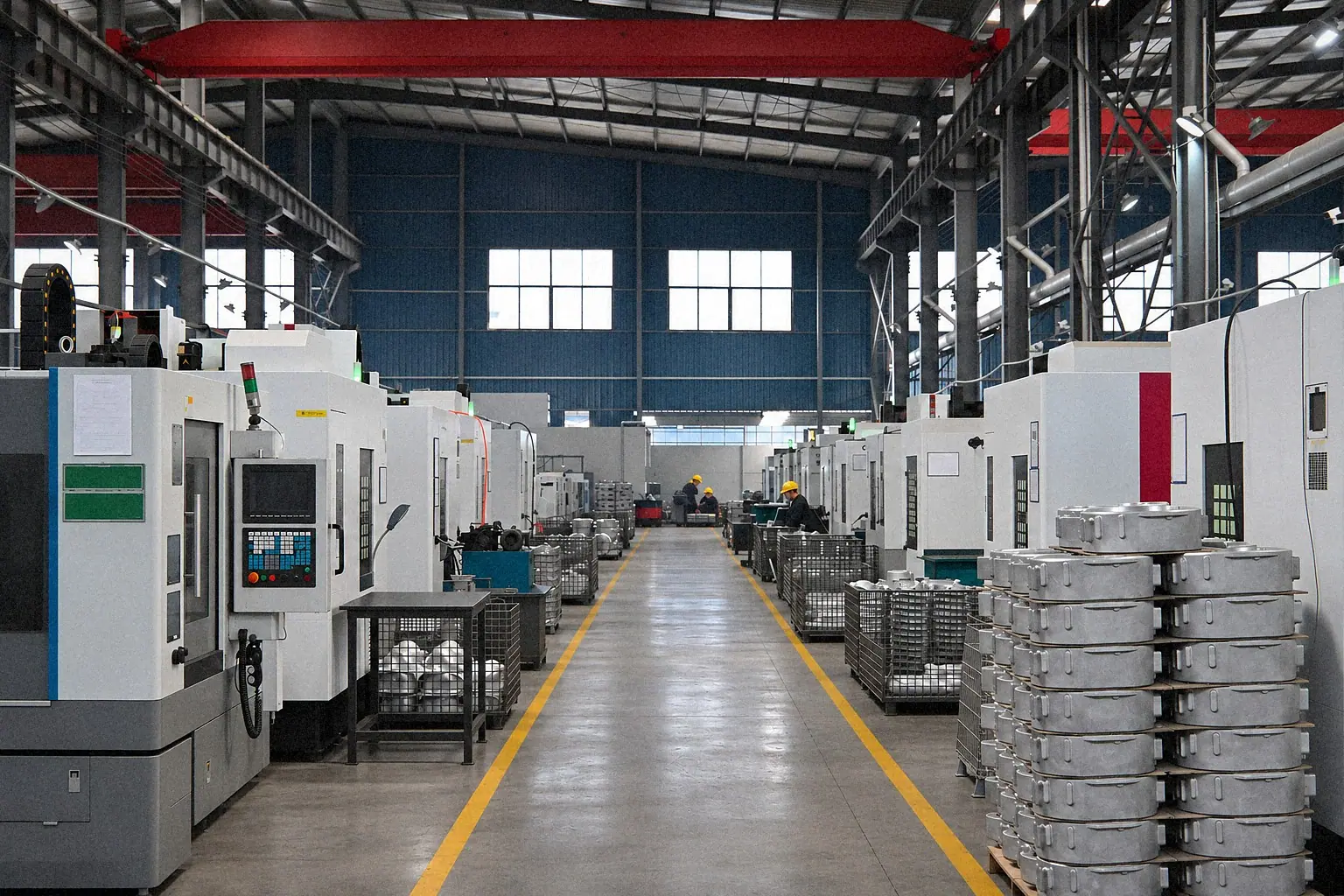
We run in-house gravity casting including tilt pour, low-pressure casting, sand casting, and die casting on two machines rated at 280 t and 450 t. The presses are for small and midsize parts that fit the tool and press. For larger castings, we evaluate gravity, tilt pour, low pressure, or sand casting. Gravity and tilt-pour castings use A356 and ZL114. We use sand cores for some tilt-pour castings.
We design and make molds in-house. Our mold life estimates are about 20,000–50,000 shots for GB 45 carbon steel and about 100,000 shots for H13 with prescribed maintenance. We select the mold steel based on expected wear and program economics.
CNC machining and casting leak checks take place at the same site. We check casting leaks by air-under-water immersion at 3 bar or more. Use the drawing to define the part's own test pressure.
What should go into a cooling family RFQ?
Send a matrix linking each fitment group to its finished drawing, revision, forecast, and first release. Add the solid model and a section view of each wet cavity. On the drawing, define alloy, temper, pressure boundaries, functional tolerances, and the finished test condition. For parts proposed as common blanks, highlight which geometry changes with each CNC setup. If you need raw blanks and finished parts quoted, put them on separate RFQ lines. In the release matrix, give the common blank revision, the finished variant revision, and the fixture and leak-test plan for each variant. A sensor port change should be visible in the machining and test entries even when the blank stays the same.
Give the target first-article release and replenishment schedule. Identify which dimensions control fit, who approves each finished variant, and which revision goes on inspection records. For related manufacturing scope, see the automotive aluminum casting page.
Send your cooling-part list and drawings for a free drawing review. Start with the variants scheduled for the first release.
U.S. duty can differ substantially between machine parts and other aluminum articles under heading 7616, so see the U.S. aluminum casting tariff guide and ask your customs broker to check each part.
Aftermarket coolant housing questions
Quote the catalog at the blank level and approve each finished configuration against its own requirements.
Can several vehicle listings use a single casting?
Yes, if one blank supports the released geometry and all required functions. Check machining stock, fluid passages, and the finished test plan for every distinct variant.
Can we use the same leak fixture after changing the outlet angle?
It depends on the port locations and the fixture's closures. Confirm that the changed wall and every required test surface remain inside the checked boundary.
Does a low-volume service variant need a dedicated permanent mold?
No. Check whether a shared blank or a sand-cast route can meet the released drawing. Ask what new fixtures or validation each option requires.
Can the housing be bought without the thermostat or pump assembly?
Yes, if your purchase specification calls for a bare or machined casting. List the checks due at casting delivery. Specify functional and durability validation separately for the assembled unit.
Send your cooling-part list and drawings for a free drawing review
Include the finished variants, annual forecast, first release, and the fluid boundaries to test. Submit the RFQ details, then email your drawing for review.
Send your drawing →