Second-source aluminum casting RFQ guide for buyers qualifying a backup supplier before supply risk becomes urgent
Use this RFQ page when a buyer needs a second source for existing aluminum castings, transfer tooling, backup capacity, sample validation, or PPAP/FAI documentation.
This page is for procurement, SQE, and operations teams comparing backup casting suppliers with a real approval path, not only a lower unit-price quote.
What procurement wants clarified
Commercial checkpoints before the buyer sends the RFQ
RFQ action
Use this page as the last stop before contact
The goal is to replace vague contact intent with a quote that includes drawing/spec, material, quantity or MOQ, tooling, lead time, testing, and reply path.
Open contact / RFQ →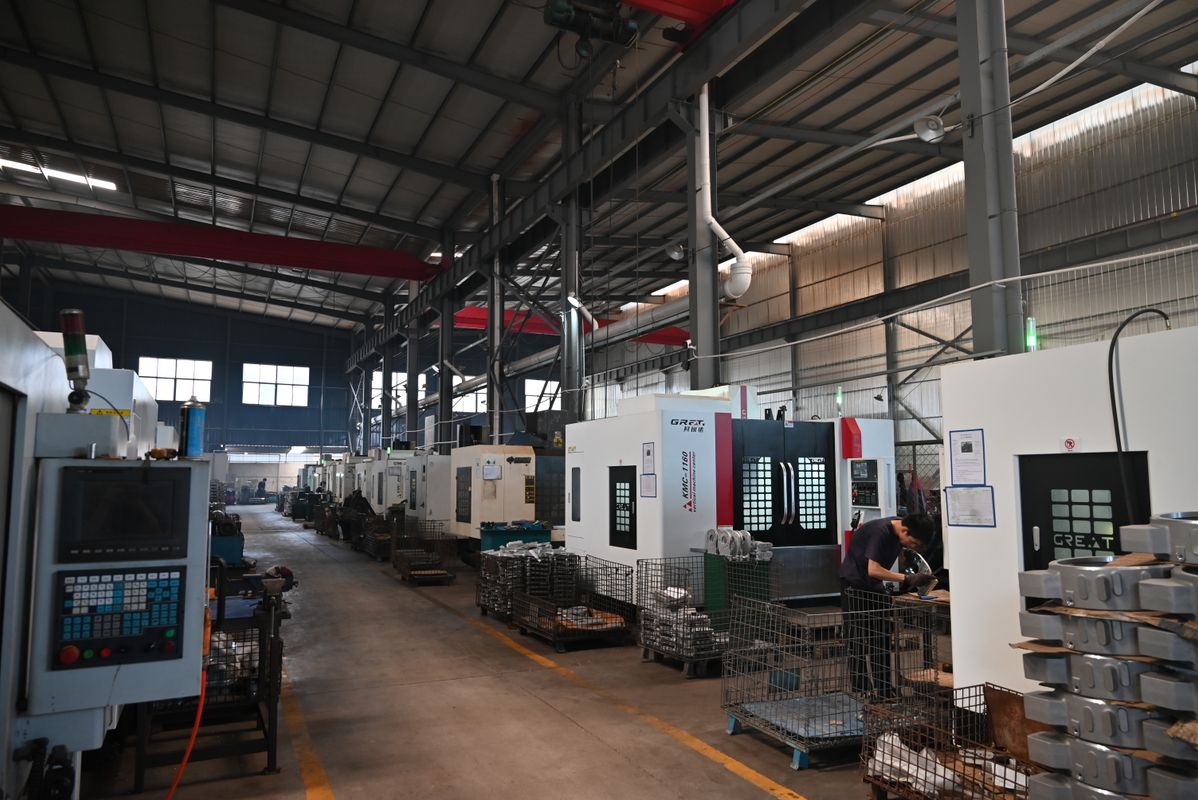
Factory evidence
Evidence buyers can verify before releasing a Second-source aluminum casting RFQ guide for buyers qualifying a backup supplier before supply risk becomes urgent order
Ningbo Bohua Mechanical Parts Co., Ltd. operates an NQA-certified IATF 16949 quality system. The current certificate covers manufacturing of aluminum alloy cast parts and is valid through 2027-11-20.
Capability does not mean every inspection method is automatically included. The drawing, CTQs, sampling level, records, and acceptance criteria must be agreed in the RFQ and control plan.
Drawing to evidence
Define the record before comparing supplier quotes
| Checkpoint | Bohua capability evidence | Buyer must define |
|---|---|---|
| Material identity | Oxford OES and project material certificates | Alloy designation, temper, governing standard, and certificate format |
| Internal soundness | Unicomp UNC-160 and Y.MU2000-D X-ray capability | Critical zones, inspection frequency, and acceptance reference |
| Dimensional approval | Hexagon Global S and NANO Metrology CMM capability | Datums, CTQs, sampling plan, and report layout |
| Pressure tightness | Dedicated pressure-tightness testing workshop | Medium, pressure, hold time, allowable leakage, and test stage |
| Submission package | PPAP documentation can be provided up to Level 5 according to project requirements. Heat/serial traceability. | PPAP level, FAI scope, retention period, and change-control requirements |
Buyer checklist
What to include so the quote is real
• Current drawing package with revision status and any approved deviations or open engineering changes
• Current supplier pain points if shareable: quality, delivery, documentation, cost, communication, capacity, or tooling wear
• Part family and risk level: pump housing, valve body, gearbox housing, bracket, intake manifold, or other custom casting
• Tooling status: new tool, duplicate tool, transfer tool, trim fixture, machining fixture, core box, and ownership notes
• Current and target annual volume, pilot quantity, backup allocation target, and whether this is standby or active dual-source supply
• Required validation package: sample order, FAI, CMM, material certificate, leak-test record, PPAP, control plan, or customer-specific documents
• Commercial notes: destination, Incoterm, packaging, forecast cadence, target qualification date, and preferred contact path
Commercial comparison
Questions that separate a serious quote from a placeholder quote
| Second-source goal | State whether the buyer needs backup capacity, cost-down leverage, quality recovery, supplier replacement, or transfer-tool review. The answer changes the quote and qualification plan. |
|---|---|
| Tooling route | New tooling gives more control, transfer tooling may reduce launch cost, and duplicate tooling can support dual-source continuity. Each option should be quoted separately when relevant. |
| Approval evidence | Sample parts alone are rarely enough. Buyers should define FAI, CMM, material records, leak-test records, PPAP, control plan, or traceability needs before awarding a second source. |
| Allocation plan | Standby source, pilot source, 80/20 split, 50/50 split, and emergency replacement programs all require different MOQ, inventory, communication, and scheduling assumptions. |
| Risk language | The RFQ should describe the risk without exposing confidential supplier names, pricing, or customer programs until NDA and commercial terms are handled. |
Internal links
Move back to the matching landing page or forward to contact
Product RFQ package: pump housing
Review the matching landing page, then return here or continue into the RFQ form with clearer commercial assumptions.
Open landing →Product RFQ package: valve body
Review the matching landing page, then return here or continue into the RFQ form with clearer commercial assumptions.
Open landing →Product RFQ package: gearbox housing
Review the matching landing page, then return here or continue into the RFQ form with clearer commercial assumptions.
Open landing →Gearbox bearing-seat inspection RFQ guide
Review the matching landing page, then return here or continue into the RFQ form with clearer commercial assumptions.
Open landing →EV motor housing and end bell RFQ guide
Review the matching landing page, then return here or continue into the RFQ form with clearer commercial assumptions.
Open landing →Second-source supplier landing
Review the matching landing page, then return here or continue into the RFQ form with clearer commercial assumptions.
Open landing →Pump housing second-source case study
Review the matching landing page, then return here or continue into the RFQ form with clearer commercial assumptions.
Open landing →Second-source audit checklist
Review the matching landing page, then return here or continue into the RFQ form with clearer commercial assumptions.
Open landing →Existing tool transfer checklist
Review the matching landing page, then return here or continue into the RFQ form with clearer commercial assumptions.
Open landing →RFQ package decision matrix
Review the matching landing page, then return here or continue into the RFQ form with clearer commercial assumptions.
Open landing →China supplier comparison
Review the matching landing page, then return here or continue into the RFQ form with clearer commercial assumptions.
Open landing →Tooling, lead time, and MOQ
Review the matching landing page, then return here or continue into the RFQ form with clearer commercial assumptions.
Open landing →Supplier capability sheet
Review the matching landing page, then return here or continue into the RFQ form with clearer commercial assumptions.
Open landing →Quote readiness checklist
Review the matching landing page, then return here or continue into the RFQ form with clearer commercial assumptions.
Open landing →Quality control
Review the matching landing page, then return here or continue into the RFQ form with clearer commercial assumptions.
Open landing →FAQ
Questions buyers usually ask on quote-intent pages
What should buyers send for a second-source aluminum casting RFQ?
Send the current drawing revision, part family, annual volume, tooling status, current risk driver, sample validation target, inspection records required, destination, and target qualification date.
Can the same casting tool be transferred to a new supplier?
Sometimes, but it should not be assumed. A transfer tool needs ownership confirmation, condition review, equipment fit, gating or feeding review, fixture status, and a validation plan before production approval.
How should a buyer compare second-source quotes?
Compare tooling route, sample validation scope, machining and inspection inclusions, documentation burden, packaging, Incoterm, MOQ, and ramp timing. Do not compare only unit price.
Can buyers discuss the second-source reason without exposing confidential details?
Yes. Buyers can describe the risk category, such as delivery, quality, capacity, cost, or business continuity, while holding supplier names, customer names, pricing, and proprietary program details until NDA is handled.
What separates a second-source RFQ from a normal cost-down RFQ?
A second-source RFQ needs a validation path. Include current revision status, tooling ownership or transfer constraints, sample or pilot quantity, inspection records needed, allocation target, and the risk category being reduced without naming confidential suppliers.
Ready to turn comparison traffic into a real RFQ?
Send the drawing package, commercial assumptions, and contact path through the RFQ form so the quote can move faster from evaluation to action.
Send RFQ / contact engineering