
Make vacuum-pump housing quotations comparable by defining the pump architecture, functional-bore map, buyer-owned rotor or vane references, final machining or coating state, datums, inspection evidence, supply boundary, records, and quote exclusions.
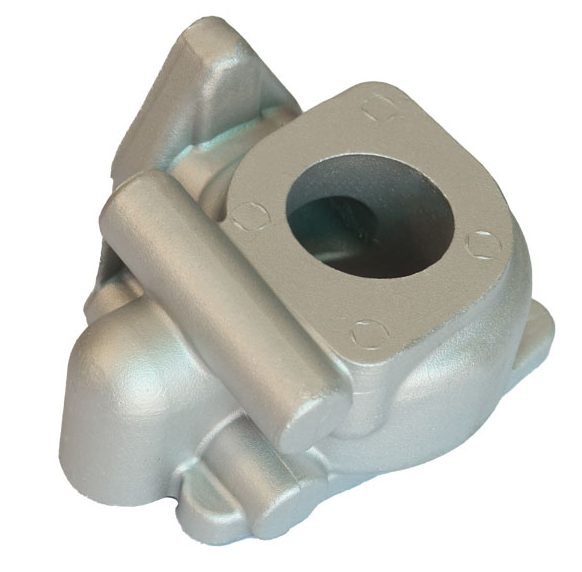
Before comparing vacuum-pump housing quotes, issue a functional-bore schedule that identifies the pump architecture, every controlled cavity, bore and end face, the buyer-owned rotor or vane reference, the final acceptance state, datums, inspection method, cleanliness, evidence and supply boundary. A product image or a generic bore tolerance cannot establish rotor clearance or complete-pump performance; those decisions remain with the pump designer or buyer.
A functional bore is a housing feature whose geometry locates, bounds, guides or seals a rotating or mating component. Depending on the approved pump architecture, it can include a stator or pumping cavity, bearing or end-plate register, shaft-seal bore, pilot, cover register or another drawing-defined feature. It does not mean every visible opening, and this article does not assign one architecture to every Bohua product example.
The buyer scenario is a quote comparison in which one supplier prices a heat-treated casting blank, another assumes finished boring, and a third includes coating, dimensional records and protected delivery. The prices are not comparable until the same housing identity, geometry owner, process state and evidence package are written into the RFQ.
Lock the pump architecture, housing identity and supply boundary
Start with the pump manufacturer or project, pump architecture, housing part number, controlled PDF and STEP revisions, installed orientation and the assembly drawing that gives each feature its function. State whether the part is for a rotary-vane, dry screw, Roots, claw or another buyer-approved architecture; do not let a supplier infer the architecture from a photo or an old sample.
Define the delivered state: raw casting, heat-treated blank, rough-machined housing, finish-machined component, coated component, cleaned and protected part, hardware-fitted housing or another controlled state. List who owns end plates, bearings, rotors or vanes, seals, covers, dowels, inserts, plugs, hardware, assembly and complete-pump tests. Bohua should quote the defined component rather than silently assuming responsibility for the whole vacuum pump.
Build a functional-bore and mating-part schedule
Number every functional cavity, bore, register and end face. For each item, identify its function, controlling drawing feature, mating part, size or geometry callout, datum reference, finished surface state, coating or treatment state, measurement method, inspection frequency and record. Separate pumping cavities from bearing, seal, pilot, cover and service-opening features.
If the architecture has paired or staged cavities, the buyer should release the required relationships among axes, center distances, end faces, registers and locating features. If a feature is only a casting opening that will be finished elsewhere, mark that boundary. This schedule prevents one supplier from quoting a casting allowance while another quotes final functional geometry.
Keep rotor, vane and running-clearance design with the pump owner
The pump designer or buyer must own the approved rotor, vane, shaft, bearing, seal and end-plate references and any clearance or contact-avoidance philosophy. The housing supplier can review manufacturability, stock, fixture access and inspection feasibility against those controlled inputs; it should not invent a universal rotor-to-housing clearance or copy a value from an unrelated pump.
For each functional bore, state whether acceptance is based on a component dimension, a relationship to another housing feature, a matched assembly, or a complete-pump test. If the mating design is not released at quotation, record the missing information as an open assumption and keep performance commitment outside the component quote.
Connect the casting blank, heat treatment and final machining state
Map as-cast surfaces, casting stock, cored or formed cavities, heat-treatment condition, rough-machining operations and final machining. Identify which operation establishes the primary datum and which features must be finished in a common setup or controlled relationship. The quote should state the blank condition, stock responsibility, fixture concept, accessible tool paths and final acceptance stage.
Bohua's live casting-plus-CNC page supports RFQ review for castings with bores, ports, threads, bearing seats, gasket faces, O-ring grooves, mounting datums and sealing lands. That is a category capability, not proof that an unseen vacuum-pump housing, machine envelope, tolerance or cycle has already been approved. The exact route still requires drawing review and sample validation: https://www.bohua-casting.com/aluminum-casting-cnc-machining-supplier .
Define coating, surface treatment and final dimensional state
If a functional bore or cavity is coated, plated, anodized, lined or otherwise treated, identify the approved process owner, controlled surfaces, masked surfaces, pre-treatment dimension, final accepted dimension, thickness evidence, finish requirement and repair authority. If no treatment is allowed, say so. Do not let a drawing mix a pre-coating dimension with a final running-clearance decision.
Keep the article and quote non-numeric unless the buyer's controlled drawing supplies the value. Bohua's public pages do not establish one universal bore coating, allowance or finish for vacuum-pump housings. Any process, thickness, tolerance and measurement plan must be confirmed for the project.
Freeze datums, fixture support and measurement condition
State the primary, secondary and tertiary datums used for final machining and inspection. Relate functional bores to end faces, mounting pads, registers, dowels and cover interfaces only where the drawing requires it. Define the fixture or support condition, orientation, temperature condition if buyer-controlled, and whether the measurement is made before or after coating, cleaning, assembly or another operation.
A CMM report is useful only when its datum frame and support state match the controlled requirement. For long, interrupted or inaccessible bores, the buyer and supplier should agree which evidence is feasible: CMM points, bore gauges, roundness or cylindricity equipment, surface-roughness measurement, a dedicated master or another project-approved method. Listing the method before quote exposes fixture, gauge and cycle-time assumptions.
Select evidence feature by feature
Create a characteristic map that links each controlled feature to the inspection method, stage, frequency, gauge identification, calibration status, report fields and reaction plan. First-article evidence can include a ballooned drawing, dimensional layout, material and heat-treatment records, datum results, bore and face relationships, surface-finish results and coating evidence when applicable. Production evidence can use a different agreed frequency and method.
Bohua's live quality page verifies CMM support for dimensions, geometric tolerances, hole position, profile and flatness, plus surface-roughness equipment and project-defined inspection planning. It does not prove that every internal bore is fully accessible to CMM or that a universal measurement method fits every design: https://www.bohua-casting.com/quality-control .
Control cleanliness, burrs and protected delivery
Define what must be removed from bores, cavities, cross-features and oil or vacuum-wetted surfaces: chips, burrs, loose media, residue, cleaning fluid and foreign material. State the wash and dry method if buyer-controlled, verification method, temporary closures, packaging orientation and protection for machined or coated surfaces. Separate component cleanliness from complete-system cleanliness.
If the buyer requires borescope evidence, wipe checks, gravimetric analysis, particle counting or another method, provide the procedure, acceptance value, frequency and record format. A general clean-and-dry note is not a substitute for a defined receiving condition.
Separate component evidence from assembled pump performance
Component evidence can prove specified housing dimensions, material condition, surface state, cleanliness and a buyer-defined pressure or leak-test boundary. Assembly evidence can prove the installed end plates, seals, bearings, rotors, covers and hardware when those items are in scope. Complete-pump evidence covers pumping speed, ultimate pressure, temperature, noise, power, vibration or other system behavior only when the buyer defines the assembly, operating condition, method and acceptance.
Do not use a casting image, a dimensional report or an external pump manual to claim complete-pump performance. The RFQ should name the owner of every component, assembly and system test so suppliers price the same boundary.
Use external sources as context, not Bohua performance proof
MAPAL's official rotary-vane vacuum-pump housing page describes stator-bore machining through pre-machining and finish-boring. Its 2026 process-engineering application PDF also presents machining contexts for rotary-vane, screw and claw vacuum-pump housings. These first-party machining sources support the buyer need to identify the architecture, functional feature and process state; they are not aluminum-design standards, Bohua tolerance commitments or proof of a new drawing. Sources: https://mapal.com/en/sectors-solutions/fluid-power/planttechnology/process-engineering-pumps/process-engineering-pumps-rotaryvanevacuumpumphousing and https://mapal.com/medias/sys_master/root/h1f/h8a/10554753744926/260121_MAPAL-Anwendungsloesungen-Verfahrenstechnik__EN/260121-MAPAL-Anwendungsloesungen-Verfahrenstechnik-EN.pdf .
Bohua's selected live product page and approved image verify an A356-T6 gravity-cast component example in the pumps and vacuum-systems category, with stable geometry and typical machined-opening context. They do not verify a rotor architecture, clearance, coating, tolerance or complete-pump result for a new project: https://www.bohua-casting.com/products/screw-machine-vacuum-pump-hydraulic-valve-34 .
Normalize the quote and send a drawing-ready RFQ
Ask each supplier to separate casting tooling, raw casting, heat treatment, rough machining, finish machining, fixtures, gauges, coating or treatment, dimensional records, surface-finish evidence, cleaning, protection, component tests, assembly, packaging and export terms. Record open design inputs, excluded mating parts, correction rounds, sample quantity, annual volume, destination, Incoterm and change authority.
Useful Bohua routes are the parent vacuum-pump housing guide at https://www.bohua-casting.com/en/resources/vacuum-pump-housing-casting-rfq-guide/ , A356 material context at https://www.bohua-casting.com/materials/a356 , casting-plus-CNC scope at https://www.bohua-casting.com/aluminum-casting-cnc-machining-supplier and quality evidence at https://www.bohua-casting.com/quality-control .
Send the controlled PDF and STEP files, architecture, functional-bore map, mating references, material and temper, final machining or coating state, datum and inspection plan, cleanliness, component-versus-system test boundary, sample quantity, annual demand, tooling status, destination and timing through https://www.bohua-casting.com/request-quote?source=jhclaw-content . Bohua can then review the defined cast-and-machined housing without treating a product image as performance proof.
Specifications
| Housing identity | Pump project, housing part number, controlled PDF and STEP revisions, installed orientation and assembly reference |
|---|---|
| Pump architecture | Buyer-approved rotary-vane, dry screw, Roots, claw or other architecture; no inference from product images |
| Supply boundary | Raw, heat-treated, rough-machined, finish-machined, coated, cleaned or hardware-fitted state and owner of mating parts |
| Functional-bore map | Numbered cavities, bores, registers and end faces with function, drawing feature, datum and final acceptance state |
| Mating references | Buyer-controlled rotor, vane, shaft, bearing, seal, end-plate and cover files plus clearance or fit owner |
| Material and process | Alloy and temper, governing specification, casting route, heat-treatment record and buyer restrictions |
| Machining plan | Casting stock, rough and finish operations, common-setup relationships, tool access, fixtures and final acceptance stage |
| Surface state | As-machined, coated, plated, anodized, lined or untreated surfaces; masking, pre-process and final dimensions and repair authority |
| Datum and support | Primary, secondary and tertiary datums, fixture or support condition, orientation and measurement stage |
| Inspection evidence | Feature-specific method, report fields, gauge or equipment ID, calibration status, first-article and production frequency |
| Cleanliness and protection | Burr and residue controls, wash and dry scope, verification, temporary closures, packaging and receiving state |
| Tests and commercial scope | Separate component, assembly and complete-pump test owners; records, changes, tooling, quantities, destination and exclusions |
FAQ
What should a buyer include in a vacuum pump housing bore RFQ?
Include the controlled housing and assembly files, pump architecture, functional-bore map, mating references, material and temper, final machining or coating state, datums, inspection methods, cleanliness, supplied state, test ownership, sample quantity, annual volume and quote exclusions.
Can a casting supplier choose the rotor-to-housing clearance?
The pump designer or buyer should own and approve the rotor, vane or other mating references and the clearance philosophy. The supplier can review whether the released housing geometry, stock, machining and inspection plan are manufacturable.
Should bore dimensions be accepted before or after coating?
The controlled drawing or RFQ must state the acceptance state for each feature. If a coating or treatment affects a functional bore, define pre-process stock, the final accepted dimension, measurement method, masked surfaces and evidence before comparing quotes.
Is a CMM report enough for every vacuum pump housing bore?
Not automatically. CMM can verify accessible datums, positions, profiles and relationships, but the agreed method should match the feature, access, length, finish and support condition. Bore gauges, roundness equipment, roughness measurement or dedicated masters may also be required by the project.
What does Bohua need for a drawing review?
Send PDF and STEP files, architecture and housing identity, functional-bore and mating-part schedules, alloy and heat-treatment target, machining and surface-treatment scope, datum and inspection plan, cleanliness, component test boundary, quantities, tooling status, destination and timing.