
Make vacuum-housing quotations comparable by mapping vacuum-exposed blind threaded holes, assembled trapped volumes, approved vent paths, fastener scope, cleaning, leak evidence, records, and change authority.
Before quoting a vacuum pump housing, mark every blind threaded hole or covered pocket that is exposed to the evacuated volume in the final assembly. For each location, define the hole ID, assembled condition, thread and bottom geometry, remaining wall, vent route or approved mitigation, fastener and washer, cleaning state, supply and installation owner, and evidence used to distinguish a real outside-to-vacuum leak from slow gas release out of a trapped volume. A casting or machining supplier should not apply a high-vacuum rule, choose a vented fastener or change the assembly silently.
A real leak provides a path from outside the vacuum boundary into the evacuated system. A virtual leak can arise from gas already inside the system, including a trapped volume that releases slowly through a restricted path. A blind tapped hole becomes relevant only when the final fastener and mating component leave such a volume connected to the vacuum side. The assembled-state drawing therefore controls the decision; the words vacuum housing do not prove that every blind hole needs special hardware.
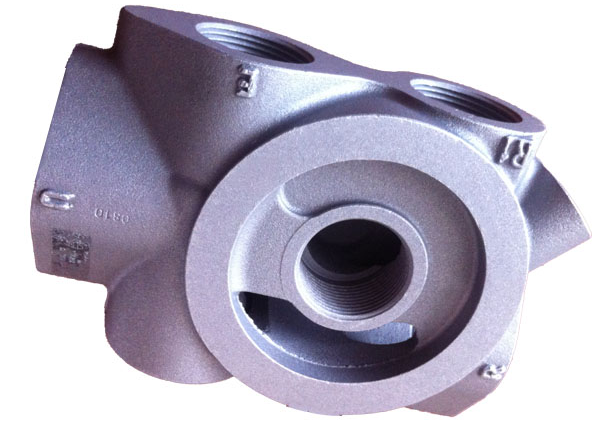
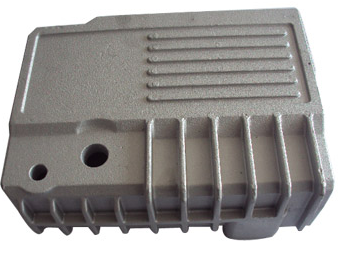
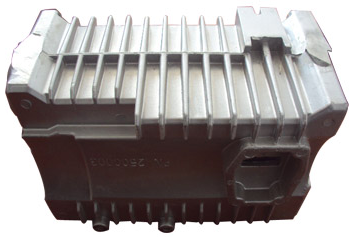
Bohua's current site shows A356-T6 gravity-cast vacuum-pump control-housing and oil-tank examples, with casting, machined ports, cavity geometry, sealing or threaded features and mounting bosses where stated. Those pages support a relevant drawing and machining review. They do not prove that every example has a vacuum-exposed blind hole or that Bohua automatically selects, supplies or installs vented fasteners. Hardware, venting, cleaning, assembly and acceptance remain project-specific quotation items.
Classify every threaded hole from the assembled vacuum boundary
Do not classify a hole from the casting model alone. Add the mating component, fastener, washer, gasket and final vacuum boundary. Give each threaded location an ID and classify it as atmosphere-side, vacuum-exposed through hole, vacuum-exposed blind hole, service connection, temporary test connection or permanent manufacturing closure. A hole can be harmless in the unassembled housing and create a residual volume only after a screw or cover is installed. Record which assembly revision controls the classification so the casting supplier, machining supplier, assembler and test team review the same condition.
Separate real-leak acceptance from trapped-volume diagnosis
A real leak and a virtual leak are not interchangeable failure descriptions. A real leak connects atmosphere or another external volume to the evacuated system. A trapped-volume virtual leak releases gas that was already enclosed within the system through a restricted path and can imitate a leak during pump-down. Agilent's current vacuum tutorial identifies trapped volume as one source of virtual leaks and notes that leak-up or rate-of-rise tests can help indicate whether base pressure is limited by a virtual or real leak. The buyer should define which question each test answers. An external leak search should not be treated automatically as proof that every internal trapped volume is acceptable.
Map the actual assembled geometry and remaining material
For every controlled blind hole, show thread designation, thread depth, drilled depth, bottom condition, fastener length and engagement, clearance below the fastener, washer or head condition, mating-part coverage and the nearest vacuum passage or exterior surface. Mark any groove, axial vent, intersecting passage or other path intended to evacuate the residual volume. Review local wall and drill-breakthrough risk before changing a blind hole to a through hole or adding a vent. The map should state whether geometry is buyer-defined or supplier-proposed and identify the controlled 2D drawing and 3D model revision.
Select the mitigation only with buyer approval
Possible design responses include moving the thread outside the vacuum volume, using a through hole where function and wall geometry allow, providing a buyer-approved vent path, using specified vented hardware, or accepting the blind-hole condition under a validated project plan. There is no universal choice. The ITER Vacuum Handbook is a high-vacuum project example that avoids blind tapped holes where possible and calls for vented screws or bolts where its project permits unavoidable blind holes. That rule belongs to ITER's vacuum classifications and should not be copied automatically into every industrial vacuum-pump drawing. The buyer's assembly, service environment, vacuum class, mechanical loads and contamination limits control the decision.
Control chips, cutting fluid, washing and drying before assembly
A blind threaded hole can retain chips, cutting fluid, wash media or solvent even when it is not a vacuum-performance problem. Define the machining and cleaning sequence, permitted process materials where relevant, internal deburr requirement, flushing or washing scope, drying state and inspection evidence before hardware is installed. If a vented fastener or groove is specified, confirm that the vent remains open after cleaning, coating and assembly. State how finished holes and vacuum-facing surfaces are protected during storage and shipment. Words such as clean and dry are not comparable requirements unless the buyer supplies a measurable rule or accepts a documented supplier proposal.
Assign machining, hardware, installation and packaging responsibility
Put ownership in the quotation. Identify who machines the hole and vent path, who supplies the fastener and washer, who verifies hardware identity, who cleans the housing, who assembles the joint and who creates the final test record. If the buyer or another assembler supplies the hardware, define the housing's delivered condition and protection of open holes. If Bohua is asked to source or install special hardware, the drawing, approved reference, inspection requirement and assembly scope must be confirmed in the quote. Tooling, gauges, special fasteners, cleaning, assembly, test fixtures and packaging should be visible line items or clearly included assumptions.
Define real-leak and virtual-leak evidence separately
For real-leak acceptance, define the tested boundary, method, tracer or test medium, pressure or vacuum condition, stabilization and test time where relevant, measurable limit, test stage, sampling and record. For trapped-volume behavior, define whether the project requires a pump-down curve, leak-up or rate-of-rise observation, hold-and-repeat sequence, assembly comparison or another approved diagnostic. Do not invent a universal vacuum level or time constant. State how a failed result is classified, which team can change the test method and whether passing one test can disposition a nonconforming hole or vent feature. Unless the buyer explicitly authorizes that relationship, it cannot.
Separate first-article evidence from production controls
First-article evidence can include the ballooned hole map, assembled-state revision, thread and depth results, local-wall or breakthrough check where required, vent-path inspection, fastener identity, cleaning confirmation, assembly record, real-leak result and any trapped-volume diagnostic required by the buyer. Production controls may use a different frequency from development qualification. Define which characteristics are verified on every part, which use approved sampling, which rely on controlled hardware or process records, and how part, lot, tool and drawing revisions are traced. A one-time pump-down study should not silently become the whole production plan.
Control substitutions, deviations and commercial scope
Require written review before changing a blind hole to a through hole, adding or removing a vent, substituting fastener or washer hardware, changing thread or drilled depth, applying an insert, changing cutting fluid or cleaning process, coating a vent path, changing the mating component, altering assembly torque or revising the leak diagnostic. Define who may accept a deviation and what evidence must be repeated. Normalize quotations for casting tooling, heat treatment, CNC fixtures, special drills or gauges, cleaning, hardware, assembly, testing, records, samples, annual demand, packaging, destination and timing. A lower unit price is not comparable if these controls are excluded.
Bohua evidence boundary and RFQ route
Relevant Bohua routes are the existing Vacuum Pump Housing Casting RFQ Guide, Screw Machine Vacuum Pump Hydraulic Valve 32, Vacuum Pump Oil Tank 36, Vacuum Pump Oil Tank 37, Gravity Casting, A356 Material, Aluminum Casting plus CNC Machining and Quality Control. The three images on this page are current Bohua catalog examples. They prove vacuum-pump product-category and manufacturing-route relevance only, not a universal virtual-leak capability or vented-fastener scope. The Agilent and ITER sources above support technical terminology and risk framing, not Bohua performance claims. Send Bohua the controlled PDF and STEP files, assembled vacuum-boundary drawing, hole and hardware schedule, material and heat-treatment target, machining and cleaning scope, real-leak acceptance, any trapped-volume diagnostic, first-article and production records, quantities, destination and timing for drawing-based review and quotation.
Specifications
| Hole ID and class | Drawing-linked identifier plus atmosphere-side, vacuum-exposed through, vacuum-exposed blind, service, temporary-test or permanent-closure class |
|---|---|
| Final vacuum exposure | Assembled boundary, mating component, fastener, washer, gasket and revision that determine whether the residual volume sees vacuum |
| Thread and bottom geometry | Thread designation, engagement, tapped depth, drilled depth, bottom condition and clearance below the installed fastener |
| Local material boundary | Remaining wall, nearest passage or exterior surface and buyer authority before any through-hole or vent modification |
| Vent path or mitigation | Buyer-approved through hole, vent path, specified hardware, relocation or accepted blind-hole condition; no universal solution assumed |
| Hardware and responsibility | Fastener and washer reference, sourcing, identity check, installation owner and delivered housing condition |
| Cleaning and protection | Chip and burr control, cutting-fluid rule, wash or flush, drying state, vent openness, packaging and measurable buyer requirement or proposal |
| Real-leak acceptance | Tested boundary, method, medium or tracer, condition, time where relevant, limit, stage, sampling and record |
| Trapped-volume diagnostic | Buyer-required pump-down, leak-up, rate-of-rise, assembly comparison or other approved evidence and classification authority |
| First-article evidence | Hole map, assembled revision, dimensional results, vent inspection, hardware identity, cleaning, assembly, test results and deviations |
| Production controls | Per-part or approved sampling checks, controlled process records, part/lot/tool traceability and record retention |
| Change and commercial control | Substitution and deviation authority, repeated evidence, tooling, gauges, hardware, cleaning, tests, quantities, packaging, destination and timing |
FAQ
Are blind tapped holes always prohibited in a vacuum pump housing?
No. First determine whether the installed fastener and mating assembly leave a trapped volume connected to the evacuated side. The buyer's vacuum class, mechanical design, contamination limit and validation plan decide whether the hole is acceptable, moved, vented or changed to another geometry.
What is the difference between a real leak and a virtual leak?
A real leak provides a path from outside the vacuum boundary into the system. A virtual leak can come from gas already inside the system, including a trapped volume that releases slowly through a restricted path. The RFQ should assign different acceptance or diagnostic evidence to the two questions.
Is a helium leak test enough to prove there is no trapped-volume problem?
Not automatically. A project-specific helium test may address an outside-to-vacuum leak boundary, while trapped-volume behavior may need an approved pump-down, leak-up, rate-of-rise or assembly-comparison diagnostic. The buyer must define what each test proves and its acceptance criteria.
Does Bohua automatically supply or install vented screws?
No automatic scope is claimed. Bohua's current pages verify relevant A356-T6 vacuum-pump-related castings and machining routes. Special hardware selection, sourcing, installation, cleaning and acceptance must be confirmed for the specific drawing and quotation.
What should I send Bohua for a blind-hole and trapped-volume review?
Send revision-controlled PDF and STEP files, the final assembly and vacuum boundary, a hole and fastener schedule, alloy and heat-treatment target, machining and cleaning scope, real-leak acceptance, any trapped-volume diagnostic, first-article and production records, quantities, destination and timing.