
Make pump-casing quotes comparable by defining the casing-side wear-ring feature, mating ring and impeller data, buyer-controlled running clearance, final machining state, datum, inspection, records, and supply boundary.
For a pump casing wear-ring bore RFQ, first define whether the supplied casting has an integral stationary running surface, a machined seat for a separate casing ring, or no wear-ring feature. Then identify the mating casing ring, impeller ring or rotating diameter; state the buyer-controlled assembled clearance and fit; and define the final geometry, datum, process state, inspection evidence, records and change authority. A casing model by itself is not enough to approve a complete-pump running clearance.
The stationary casing-side feature and rotating impeller-side feature form one assembled relationship. A finished casing bore can pass dimensional inspection while the assembly still fails its intended clearance or performance if the mating diameter, ring installation, temperature or assembly state differs from the controlled design. Component inspection and complete-pump acceptance must remain separate decisions.
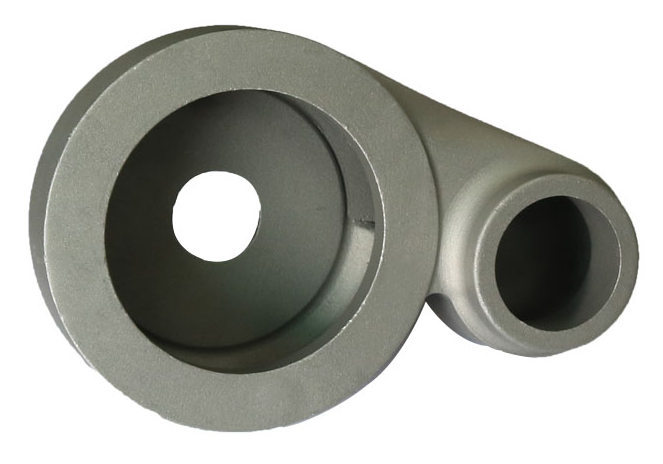
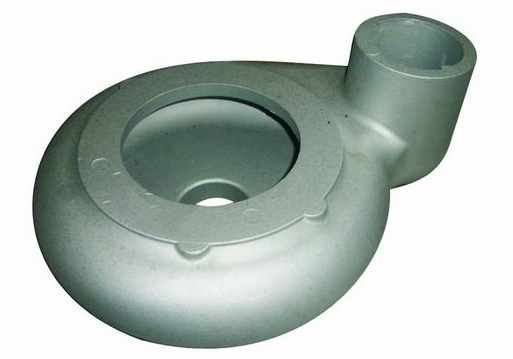
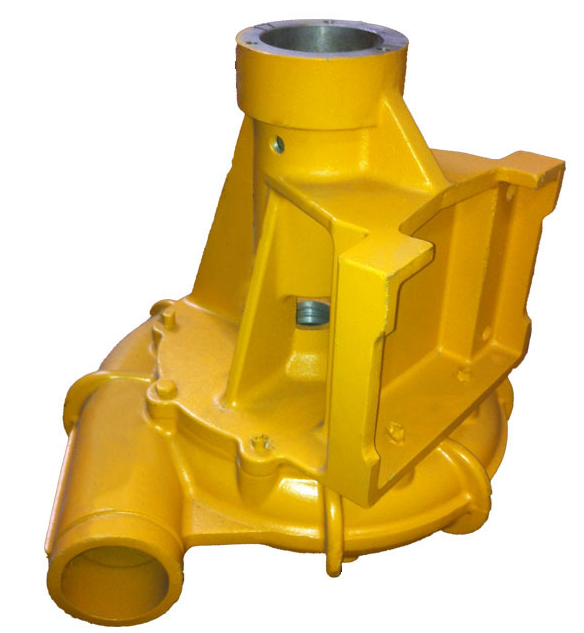
Bohua's current site verifies aluminum pump-casing product categories, A356 or ZL114 pump-housing sourcing, casting plus CNC machining, drawing review and CMM resources. Those pages and approved images show category and workflow relevance only. They do not prove that a pictured casing uses a replaceable wear ring, meets a universal clearance, complies with API 610, or has passed a complete-pump performance test.
Define the supplied casing feature before asking for price
Classify the feature on the controlled drawing. It may be the finished casing surface that faces a rotating impeller-side diameter, a machined bore or counterbore that receives a separate stationary casing ring, a cast pocket that still needs final machining, or a casing with no wear-ring feature in the supplier's scope.
State what Bohua is being asked to deliver: raw casting, heat-treated blank, fully machined casing, casing with a buyer-supplied ring installed, casing with a supplier-sourced ring installed, or an assembly-ready component. Also state who supplies the ring, who approves its material and design, who installs it, and whether any removal or replacement provision belongs in tooling or service documentation. The quotation should not infer these decisions from a product name or photograph.
Map the stationary and rotating mating parts
Create a numbered interface map for the stationary casing feature, optional casing wear ring, impeller or impeller wear ring, shaft or rotor reference, nearby shoulder, cover, fasteners and any other part that fixes axial or radial position. Identify the part number, drawing revision, supplied condition and design owner for every item.
Hydraulic Institute material explains that moving pump parts require clearance and uses the impeller-eye to wear-ring or volute-casing gap as an example. EASA describes stationary casing and rotating impeller wear-ring relationships. These sources support the need to identify both sides of the interface. They do not authorize Bohua to choose the pump architecture, mating parts or acceptance values.
Keep the assembled clearance under buyer design control
The RFQ should state the approved assembled running-clearance definition and whether it is radial or diametric, identify the two controlled diameters or profiles that create it, and state the design condition in which it applies. If temperature, coating, ring installation or another assembly state matters, the authorized pump design must define that condition.
Do not ask a casing supplier to copy a universal number from a general article or unrelated pump. EASA notes that manufacturer dimensions are the preferred guidance and distinguishes diametric measurement from one-side running clearance. The buyer should therefore provide the approved mating data or explicitly request an engineering proposal that remains subject to buyer validation. No proposed value becomes a Bohua capability or production commitment until it is accepted on the drawing or project specification.
Put finished geometry and retention on controlled files
The PDF drawing and STEP model should agree on the casing bore or running-surface diameter, axial depth, shoulder location, width, chamfers, corner radii, edge condition, local wall or stock boundary and any ring seat or stop face. For a separate casing ring, define the ring outside and inside diameters, length, fit, retention concept, orientation and final installed state through the buyer-approved design.
Also state whether any coating, sealant, staking, fastener, thermal installation method or other retention step is permitted. Do not assume press fit, adhesive, staking or a particular ring material. If the ring drawing is controlled elsewhere, provide the revision and the dimensions or inspection results needed by the casing supplier. When 2D and 3D files disagree, the RFQ must name the controlling source and deviation path before quotation.
Relate the bore or seat to the pump datum system
A diameter can pass by itself and still be mislocated relative to the rotating assembly. Define the datum reference frame and the casing feature's relationship to the bearing bore, seal chamber, shaft or rotor axis, mounting face, cover pilot, fastener pattern, volute or another project-defined functional feature. State whether the drawing controls position, runout, concentricity, perpendicularity, profile, face location or another relationship.
Bohua's current quality page lists CMM support for dimensions, geometric tolerances, hole position, profile and flatness. The RFQ should still name the characteristic, final part state, support or fixture condition, inspection method, report format and frequency. Equipment presence does not create a universal tolerance or prove the assembled rotor relationship.
Connect casting stock, heat treatment and CNC sequence
Treat the casing-side feature as a finished requirement that begins with the casting plan. Show machining stock, nearby wall sections, local porosity-sensitive zones, heat-treatment state, reference surfaces and the sequence that creates the final bore or seat. Identify whether rough machining occurs before heat treatment, whether the feature is finish machined afterward, and which state controls final acceptance.
Bohua's current pump pages verify A356 or ZL114 pump-housing categories, gravity casting, downstream CNC and drawing-based review. The final alloy, temper, casting route, stock, fixture, cutting sequence and inspection plan must be reviewed against the new drawing. The article does not claim that every pump casing requires A356-T6 or that one route guarantees clearance, density, alignment or pump performance.
Separate surface condition, fit and ring installation
Define which surfaces need a project-specific texture or finish requirement, where measurement applies, whether machining lay matters, and which burrs, dents, chatter, nicks, corrosion, coating or handling damage are unacceptable. For an installed ring, distinguish casing-seat inspection before installation, ring inspection, installation-process evidence and final installed geometry.
If the casing is shipped without the ring, state how the bore or surface is cleaned, protected and packaged. If the ring is installed by Bohua, identify who supplies installation tooling and gauges, whether installation evidence is first-article only or required in production, and what reaction is required after a damaged seat or rejected installed result. These fields remain project-defined; no universal fit, surface or packaging method is asserted.
Separate component inspection from assembled evidence
Build separate evidence columns. Casing-component evidence may include the finished bore or seat diameter, depth, face location, datum relationship, surface condition and ring-seat checks. Installed-component evidence may include ring identity, installation state, retention evidence and final ring geometry. Assembled evidence may include the actual mating diameter, calculated or measured clearance, rotation check, hydraulic test or complete-pump validation when the buyer requires it.
A casing-only CMM report does not prove the assembled clearance because it does not verify the mating rotating part or final assembly state. Hydraulic Institute sources explain why clearances can affect contact risk, internal leakage and pump behavior. Bohua should be held only to the component, installation or test scope explicitly included in the accepted quotation and controlled files.
Control records, standard editions, deviations and changes
For first articles, identify the required ballooned drawing, dimensional report, CMM or gauge results, surface record, material and heat-treatment records, ring certificate or identity, installation evidence, assembly-clearance evidence and photographs of the protected shipment state. For production, define controlled characteristics, sampling or all-part checks, gauge identification, traceability, record retention and reaction plan.
If the project invokes a pump standard, state the standard and edition that actually controls the design. The API standards plan currently lists API Standard 610 edition 13 dated 2026-06-29. That current listing is an edition-control reminder, not evidence that Bohua, the proposed casing or the article is API 610 compliant. Require buyer approval for changes to drawings, mating parts, ring source or material, casting route, heat treatment, tooling, CNC program, fixture, inspection method, installation process, repair or sub-supplier.
Normalize the quote and route a drawing-ready RFQ
Ask every supplier to separate tooling, raw casting, heat treatment, rough and finish machining, CNC fixtures, ring sourcing, installation tooling, gauges, CMM reports, first-article records, assembly checks, functional tests, protection, packaging and export terms. Confirm whether the quote covers only the machined casing or also the ring, installation, mating-part review and assembled evidence.
Current Bohua evidence and internal routes: https://www.bohua-casting.com/applications/pump-housing ; https://www.bohua-casting.com/products/pump-casing-1 ; https://www.bohua-casting.com/products/pump-casing-2 ; https://www.bohua-casting.com/industries/industrial-pump/a356-pump-housing-supplier ; https://www.bohua-casting.com/resources/pump-housing-rfq-checklist ; https://www.bohua-casting.com/aluminum-casting-cnc-machining-supplier ; https://www.bohua-casting.com/materials/a356 ; https://www.bohua-casting.com/quality-control ; https://www.bohua-casting.com/resources/casting-drawing-requirements . Adjacent CMM guide: https://www.bohua-casting.com/en/resources/pump-housing-seal-chamber-bearing-bore-cmm-rfq/ .
Send the controlled PDF drawing and STEP model, pump and ring configuration, mating diameters, buyer-approved assembled clearance, ring supply and installation boundary, annual volume, tooling status, alloy and heat-treatment requirement, machining scope, datum plan, inspection records, destination and timing through https://www.bohua-casting.com/request-quote?source=jhclaw-content . Bohua can then review and quote the defined casing scope without treating product examples as proof that the new pump design is already validated.
Specifications
| Supply boundary | Raw casting, heat-treated blank, finished casing, casing with ring installed, or assembly-ready component plus the owner of each excluded item |
|---|---|
| Pump configuration | Casing type, integral running surface or replaceable ring, stationary and rotating parts, part numbers, revisions and assembly state |
| Governing source | Controlled buyer drawing, pump design, mating-part drawing, named standard and edition, approved calculation or validation record |
| Casing feature | Finished bore or surface diameter, depth, shoulder, width, chamfers, radii, edge condition, local stock and wall boundary |
| Mating data | Casing ring, impeller ring or rotating diameter, supplied and installed state, approved material or source, and design owner |
| Clearance and fit | Buyer-approved radial or diametric definition, controlled mating dimensions, design condition, fit, retention and installation authority |
| Datum relationship | Datum frame and relationship to bearing bore, seal chamber, shaft or rotor axis, mounting face, cover pilot, fasteners and volute |
| Process state | Alloy and temper target, casting route review, machining stock, heat-treatment state, rough and finish machining sequence and repair authority |
| Surface and protection | Texture or finish where specified, lay, burr and damage rules, cleaning, temporary protection, packaging and receiving condition |
| Inspection | Casing, ring, installed and assembled characteristics; method, support state, gauge or CMM, report format and frequency |
| Functional evidence | Component-only report, installed-ring check, measured or calculated assembly clearance, rotation or complete-pump validation when explicitly scoped |
| Records and changes | First-article and production records, traceability, deviations, reaction plan, change approval, tooling, gauges and commercial exclusions |
FAQ
What dimensions should a buyer send for a pump casing wear-ring bore RFQ?
Send the controlled casing bore or running-surface geometry, ring-seat details, mating casing-ring and impeller-side diameters, buyer-approved clearance definition, datum relationships, final process state, surface requirements, inspection method and the revisions that govern each item.
Can the casing supplier choose the running clearance from a general standard?
Not without buyer authorization. The pump designer or buyer should identify the applicable design source, standard edition, mating parts, operating condition and approved clearance. A supplier proposal can be reviewed, but it should remain an explicit assumption until the buyer approves it.
Does a CMM report on the casing prove the assembled wear-ring clearance?
No. A casing CMM report can verify the stationary feature and its datum relationships. The assembled clearance also depends on the mating ring or impeller diameter, ring installation, assembly position and controlled design condition.
At which stage should the wear-ring bore or seat be machined and inspected?
The drawing and process plan should identify the final accepted state. For a heat-treated and machined casing, buyers should state which operations occur before and after heat treatment and require inspection after the feature reaches its final controlled geometry and surface condition.
What should a buyer send Bohua for review?
Send the controlled PDF and STEP files, pump and ring configuration, mating dimensions, approved clearance, alloy and heat-treatment target, annual volume, tooling status, machining and installation scope, datum and inspection plan, required records, destination and launch timing.