
Make pump-casing quotations comparable by freezing the buyer-approved volute and cutwater geometry, impeller relationship, casting and final-surface state, inspection evidence, pressure boundary, hydraulic-test ownership, records, and quote exclusions.
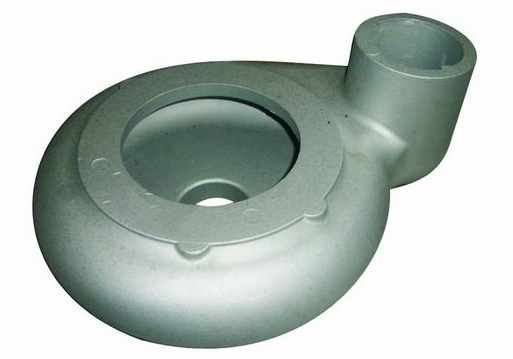
A quote-ready pump casing volute and cutwater RFQ must freeze the buyer-approved hydraulic geometry in controlled 3D and section data; identify the volute type, cutwater, throat, impeller relationship, suction and discharge passage boundaries, casting and final surface states; and separate component geometry and pressure-boundary inspection from complete-pump hydraulic testing. A casting supplier should not redesign the flow path or infer pump performance from a catalog image.
The volute is the casing passage that collects flow leaving the impeller and expands toward the discharge. The cutwater, also called the tongue, is the local transition nearest the impeller. These features are hydraulic design inputs owned by the pump designer. The casting RFQ translates them into controlled tooling, core, surface-state, inspection and change requirements without assigning a foundry responsibility for the pump curve.
Bohua's current site verifies one aluminum pump-casing product example and published pump-housing, A356, casting-plus-CNC, pressure-tightness and dimensional-inspection routes. The exact approved image shows a volute-style casing and discharge neck. This evidence establishes product-family and workflow relevance only. It does not prove CFD capability, a universal internal-surface tolerance, complete internal-flow inspection, cutwater machining, hydraulic efficiency, pressure rating or complete-pump performance testing for a new project.
Lock the pump identity and supply boundary
Identify the pump family, casing part number, rotation, single- or double-volute arrangement when applicable, controlled PDF and STEP revisions, impeller and cover references, installed orientation and the exact component being quoted. State whether Bohua is reviewing a raw casting, heat-treated blank, finish-machined casing, cleaned and protected component or another defined state.
List who owns the hydraulic design, impeller, wear rings, cover, gasket or O-ring, plugs, fasteners, coating, pressure test, pump assembly and performance test. A quotation is not comparable when one supplier prices a casting while another assumes machining, hardware, assembly or complete-pump validation.
Freeze the hydraulic master geometry
Release the buyer-approved 3D flow-path model and controlled sections that define the suction path, impeller eye interface, volute centerline, cross-section progression, throat, cutwater or tongue, discharge transition and nozzle. Name the governing file when 2D notes, 3D data, CFD geometry and legacy samples conflict. Mark which dimensions are design characteristics and which are supplier-proposed manufacturing controls.
The Hydraulic Institute explains that volute cross-sections develop from the cutwater toward the discharge and that sudden flow-area transitions can affect losses. Use that first-party industry evidence to keep the geometry under pump-designer control, not to copy one pump's dimensions into another. Source: https://www.pumps.org/2023/05/15/important-considerations-in-the-design-of-water-pumps/ .
Map the cutwater, throat and impeller relationship
Define the cutwater tip or tongue, throat area, local radii, transition into the discharge, impeller outside-diameter reference, axial position and any buyer-controlled clearance or trim range. State the measurement condition, temperature when relevant, datum system and whether the casing, impeller or both are included in supplier scope.
The Hydraulic Institute notes that changing impeller-to-casing or cutwater clearance changes internal recirculation and pump performance. Therefore the casting supplier should receive the approved relationship and acceptance method; it should not select a clearance or promise a hydraulic result. Source: https://www.pumps.org/2022/09/27/trimming-impellers-to-reduce-energy-consumption/ .
Separate as-cast, cored and machined surfaces
Color-code or otherwise identify every as-cast, core-formed, trimmed, blended and machined surface. Define casting stock near the inlet, eye, cutwater, throat, discharge neck, flange, seal chamber and datum features. If blending, grinding or machining is permitted inside the flow path, specify its limits, approval authority, surface requirement and record.
Do not use a single generic surface-finish value for the whole casing. The buyer should distinguish hydraulic surfaces, sealing or mounting faces, datum features and nonfunctional exterior surfaces. Bohua's casting-plus-CNC route supports drawing and fixture review, but the exact accessible machining scope and feasible acceptance method must be confirmed from the project files.
Connect tooling, cores and casting risk to the geometry
Ask the supplier to review parting strategy, core or insert concept, core location references, draft, extraction, local wall transitions, feeding risk, machining stock and how tooling maintenance could shift the hydraulic passage. Identify sections where core movement could alter the cutwater, throat, remaining wall or machining breakthrough risk.
This review does not transfer hydraulic design to the foundry. The buyer controls the approved passage and allowable deviation; the supplier proposes a manufacturable tooling and process plan. If the buyer requires a particular casting simulation, sectioning study, radiography zone or destructive verification, state the method, sample, acceptance and report instead of assuming it from general casting capability.
Choose inspection evidence by feature and access
Create a characteristic map that links each question to an accessible measurement method. External datums, flanges, bores and machined interfaces may be suitable for CMM or gauges. Internal sections may require buyer-approved templates, section checks, replica methods, accessible point measurements, controlled samples or another project-defined method. Name the datum, support condition, section, equipment, frequency and output for every required result.
Bohua's quality page verifies project-defined CMM support for dimensions and geometric tolerances. It does not prove that a CMM can see every internal volute surface. Do not specify CT, borescope, laser scanning or a universal internal-profile capability unless the project separately verifies the method and supplier scope.
Separate pressure integrity from hydraulic performance
A casing pressure or leak test can verify a defined pressure boundary under a defined setup; it does not prove that the volute, cutwater and impeller combination meets head, flow, efficiency, noise, cavitation or radial-load targets. The RFQ should separately define component pressure or leak evidence, fit-up evidence and complete-pump hydraulic testing.
For each layer, state the owner, assembly state, medium, pressure or operating point, fixture and closures, stabilization and duration, acceptance, sampling, record and reaction plan. Bohua publishes a pressure-tightness workshop and project-defined test route. Method, pressure, duration and acceptance still follow the buyer's drawing and project requirements.
Control flow-path condition, cleaning and protection
Define allowable flash, fins, loose media, burrs, grinding marks, exposed core wire, residues and foreign material in the flow path. State whether a visual boundary, touch-safe edge, profile template, surface comparator, cleanliness check or another method governs each zone. Identify wash and dry requirements, temporary closures, coating or corrosion protection and receiving condition.
Keep visual casting acceptance, geometric conformance, delivered cleanliness and hydraulic surface performance as separate questions. If the buyer requires a numeric roughness, particle limit or coating thickness, tie it to the exact zone, method, frequency and governing source rather than applying an unverified site-wide value.
Control first-article, production and change records
For first articles, identify the ballooned drawing, approved 3D revision, flow-path section map, material and heat-treatment records, external datum and interface report, internal geometry evidence, pressure-boundary result and complete-pump test result when included. For production, define controlled characteristics, sampling or all-part checks, gauge identification, calibration, traceability, retention and reaction after a failed result.
Require approval for changes to the hydraulic model, impeller family, cutwater or throat geometry, core or insert, parting strategy, tooling repair, material or temper, heat-treatment route, machining program, fixture, blending method, inspection method, subcontractor and repair or impregnation route. A small internal change can alter casting risk or pump performance even when the exterior looks unchanged.
Normalize the quote and submit a drawing-ready RFQ
Ask every supplier to separate tooling, core equipment, raw casting, heat treatment, rough and finish machining, fixtures, gauges, first-article flow-path evidence, production inspection, cleaning, pressure or leak testing, coating, packaging and export terms. Confirm whether the impeller, wear ring, cover, seals, hardware, assembly, hydraulic performance test, CFD or redesign work are excluded.
Current Bohua evidence and buyer routes: https://www.bohua-casting.com/products/pump-casing-2 ; https://www.bohua-casting.com/applications/pump-housing ; https://www.bohua-casting.com/pump-housing-manufacturer ; https://www.bohua-casting.com/aluminum-casting-cnc-machining-supplier ; https://www.bohua-casting.com/quality-control ; https://www.bohua-casting.com/materials/a356 . Parent and adjacent guides: https://www.bohua-casting.com/en/resources/pump-housing-core-shift-wall-thickness-inspection-rfq/ ; https://www.bohua-casting.com/en/resources/pump-casing-wear-ring-bore-clearance-rfq/ ; https://www.bohua-casting.com/en/resources/pump-housing-auxiliary-port-clocking-rfq/ .
Send the controlled PDF and STEP files, pump and impeller references, flow-path section map, material and heat-treatment target, casting and CNC state, inspection and pressure-test package, annual volume, tooling status, hydraulic-test ownership, destination and timing through https://www.bohua-casting.com/request-quote?source=jhclaw-content . Bohua can then review the defined casing without treating the product image as proof that the pump design is already validated.
Specifications
| Pump identity | Pump family, casing part number, rotation, casing arrangement, installed orientation and controlled PDF and STEP revisions |
|---|---|
| Supply boundary | Raw, heat-treated, finish-machined, cleaned or protected state; owner of impeller, wear rings, cover, seals, hardware, assembly and tests |
| Hydraulic master | Governing 3D flow-path model, controlled sections, revision authority and conflict rule for 2D, 3D, CFD and legacy samples |
| Volute definition | Single, double or project-defined arrangement; centerline, section progression, throat and discharge transition |
| Cutwater and throat | Tip or tongue geometry, local radii, throat area, transition, datum, measurement state and allowable deviation |
| Impeller relationship | Impeller reference and trim range, outside diameter, axial position, buyer-controlled clearance and assembly condition |
| Flow-path boundaries | Suction, eye, volute, cutwater, discharge and nozzle surfaces; casting stock and as-cast, cored, blended or machined state |
| Casting and CNC plan | Tooling and core concept, parting, draft, stock, heat-treatment sequence, fixture, accessible machining and final acceptance stage |
| Material and condition | Alloy and temper target, governing standard, material and heat-treatment records, repair and impregnation authority |
| Inspection evidence | Characteristic map, datum and support state, accessible CMM or gauges, internal-section method, first-article and production frequency |
| Pressure and hydraulic evidence | Separate component pressure or leak test, fit-up evidence and complete-pump head, flow, efficiency or operating test ownership |
| Records and commercial scope | Traceability, gauge status, reaction plan, change approval, tooling, fixtures, tests, annual volume, destination and quote exclusions |
FAQ
What should a buyer include in a pump casing volute RFQ?
Include the controlled casing and flow-path files, pump and impeller identity, volute and cutwater sections, casting and final-surface map, material and heat treatment, inspection evidence, pressure-test scope, complete-pump test owner, annual volume, tooling status and quote exclusions.
Who should own the volute and cutwater geometry?
The pump designer or buyer should own and approve the hydraulic geometry. The casting supplier reviews manufacturability, tooling, cores, stock, machining and inspection against those controlled files rather than choosing the pump's hydraulic design.
Can a CMM inspect the complete internal volute surface?
Not automatically. CMM is useful for accessible datums, bores, faces and points. Internal sections need a project-approved method selected by geometry and access, such as templates, controlled section checks, replicas, accessible measurements or another separately verified technique.
Does a pump casing pressure test prove hydraulic performance?
No. A defined pressure or leak test verifies a specified pressure boundary under its setup. Pump head, flow, efficiency, noise and other hydraulic results require a separately defined assembled-pump test with the approved impeller and operating condition.
What should a buyer send Bohua for review?
Send PDF and STEP files, pump and impeller references, flow-path and cutwater sections, material and temper, casting and CNC surface map, inspection and pressure-test package, annual demand, tooling status, hydraulic-test responsibility, destination and timing.