
Make industrial valve-body quotations comparable by defining the exact trim architecture, body-side seat pocket, plug or stem guide and bonnet datum chain, sealing interfaces, CNC and inspection evidence, assembled-test owner, records and quote exclusions.
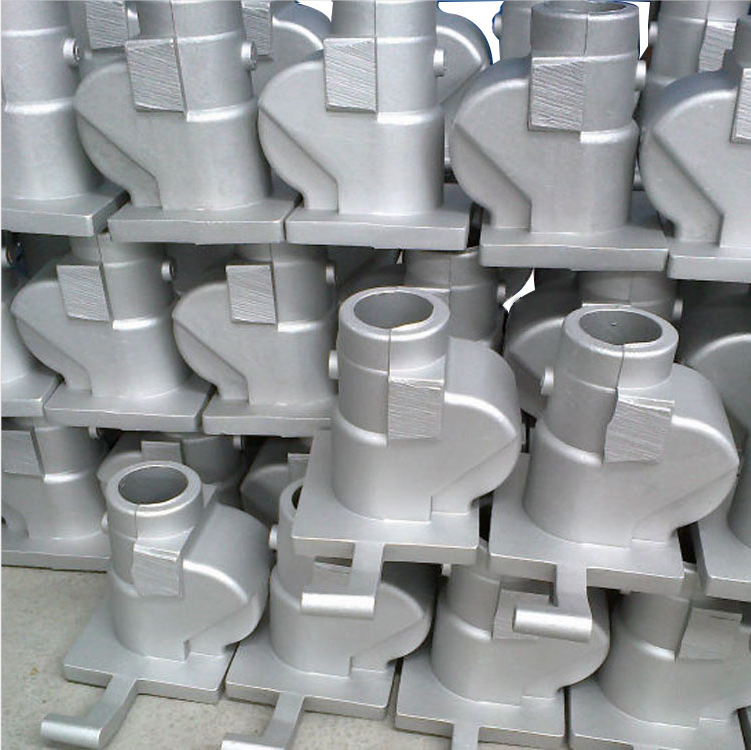
A quote-ready industrial valve body RFQ must identify the exact valve and trim architecture, define the body-side seat pocket or retaining interface, map the plug or stem guide and bonnet datum chain, freeze sealing faces and final CNC state, and separate dimensional evidence from assembled shutoff and functional testing. A casting supplier should not infer the seat ring, guide arrangement, leakage class or complete-valve acceptance from a body photograph.
A seat pocket is the body-side geometry that locates, supports or retains the buyer-approved seat or trim arrangement. Its function depends on the exact valve design. Some designs use a separate seat ring, cage or retainer; others guide the plug through the bonnet, body, port or another assembly feature. The controlled valve drawing and assembly bill must therefore govern the RFQ.
Bohua's current site verifies one ZL114/A356-family industrial valve-body casting example for compressor and equipment flow-control systems. Its published product evidence names bore position, sealing faces, bore concentricity, sealing flatness, internal soundness, machining datum planning and inspection reports. This establishes product-family and workflow relevance only. It does not prove that Bohua owns a buyer's trim design, seat dimensions, valve standard, leakage class, pressure rating or complete-valve validation.
Lock the valve, trim architecture and supply boundary
State the valve family, service, body part number, nominal size or project identifier, flow direction, installed orientation, controlled PDF and STEP revisions, material target, body end connection and the exact trim assembly that mates with the body. Identify whether the design uses a seat ring, cage, retainer, threaded seat, pressed feature, integral seat or another buyer-controlled construction.
Define the delivered state: raw casting, heat-treated blank, rough-machined body, finish-machined and cleaned body, trim-ready component, partly assembled body or complete valve. List who owns the body design, seat and trim design, plug and stem, guide bushings, bonnet, gaskets, packing, fasteners, actuator, assembly, pressure tests, seat leakage tests and functional validation. Quotes are not comparable when one supplier prices an empty machined body and another assumes installed trim and testing.
Define the seat and guiding architecture before dimensions
Name the approved seat or seat-ring part, cage or retainer, plug, stem and guide arrangement, then tie each item to a controlled revision. State how the seat is located and retained, which feature controls alignment, which body surfaces carry gasket or sealing contact, and which assembly condition establishes final position. If the trim architecture is not final, record it as an open buyer decision rather than asking a casting supplier to choose by analogy.
Emerson's Control Valve Handbook describes several product architectures, including stem-guided, cage-guided, top-and-bottom-guided and port-guided arrangements. The useful RFQ lesson is that plug-to-seat alignment depends on the approved valve design; the handbook is not a dimension source for a new Bohua body. Source: https://www.emerson.com/is/content/emerson/de/final-control/isolation-valves/documents/control-valve-handbook-en-3661206.pdf .
Map the body-side seat pocket and retaining interface
Create a drawing-linked schedule for the seat pocket or body-side retaining geometry. Include the feature ID, controlling seat or trim reference, diameter or profile, depth or axial location, shoulder, lead-in, thread or retention feature, gasket or seal land, surface condition, edge rule, local wall, machining stock, datum relationship, inspection method and final accepted state. Mark which surfaces remain as cast and which are accepted only after final CNC and cleaning.
Do not copy a tolerance, surface texture, fit or seat-retention method from another valve. The buyer or valve designer must release the values and conflict rule for the exact architecture. Bohua's live product page verifies bore-position and sealing-face relevance but does not identify the pictured body's seat part, trim retention, pressure class or final seat dimensions.
Freeze the plug or stem guide and bonnet datum chain
Show how the body seat reference relates to the approved guide feature, plug or stem axis, bonnet pilot or locating feature, body-to-bonnet face, fastener pattern and any bottom guide or cover. Separate body features from guide bushings, cages, packing boxes and trim parts supplied by others. Define the assembly state and datum frame used to judge coaxiality, position, runout, perpendicularity or another buyer-specified relationship.
An Emerson Fisher ET instruction manual gives a product-specific example in which a seat ring, cage guide boss, body-to-cage gasket, bonnet gasket and centered plug/stem assembly work together. Use it to ask who owns every locating feature and gasket interface, not to copy its geometry into a different valve. Source: https://www.emerson.com/is/content/emerson/en/final-control/flow-controls/documents/d100398x012.pdf .
Define bonnet and end-connection sealing interfaces
For the body-to-bonnet joint, identify the mating bonnet revision, pilot or locator, gasket or O-ring land, groove owner, bolt or stud pattern, dowels, hardware owner, face state, surface requirement, assembly support and inspection datum. For each inlet, outlet or auxiliary connection, identify the connection standard or buyer drawing, axis, face, bore, hole pattern, sealing land, thread, coating mask, delivered protection and inspection evidence.
Keep body machining evidence separate from gasket selection, bolt loading, packing behavior and assembled external-leak performance. Existing Bohua pages verify drawing-based CNC review for valve-body bores, ports, datum faces and sealing grooves. They do not create a universal flange, bonnet, seat or pressure specification.
Connect casting stock, heat treatment and CNC sequence
Mark cavity and wall geometry around the seat pocket, guide and end connections; cored or drilled passages; local section changes; gates, risers and repair-sensitive zones; machining stock; heat-treatment state; rough and finish cuts; fixture support; tool access; deburr and cleaning stages. Identify which datum is available in each manufacturing state and which final features must be created in one setup or re-established by inspection.
Bohua's live industrial valve-body page identifies ZL114 or A356-family gravity casting, tooling feedback, machining planning and inspection reporting. Bohua's casting-plus-CNC and quality pages support drawing-based datum, fixture and CMM planning. The exact stock, sequence, tool, fixture, feasible tolerance, heat-treatment route and repair authority for a new body still require controlled-file review.
Separate four evidence and test layers
Layer one is material and casting evidence: alloy, temper or heat-treatment state, traceability, visual or project-defined internal inspection and repair authority. Layer two is body dimensional evidence: seat pocket, guide and bonnet relationship, sealing faces, connections, final cleanliness and CMM or gauge records. Layer three is bare-body or component pressure and leak evidence under a defined boundary and fixture. Layer four is assembled seat leakage, actuator travel, shutoff class and complete-valve functional validation with the approved trim, gaskets, packing, hardware and test procedure.
Passing one layer does not prove the others. CMM cannot prove seat shutoff. A bare-body pressure test cannot prove plug-to-seat alignment or the complete valve's leakage class. The RFQ must name the owner, assembly state, medium, pressure or operating condition, stabilization, acceptance source, frequency and report for every required test.
Build an inspection and record plan by state
For the raw or heat-treated casting, define the visual, dimensional, material and project-specific internal-inspection scope. For rough machining, record stock cleanup, datum establishment and any risk exposed near the seat pocket or passages. For final CNC, identify the characteristics, support state, CMM or gauge method, surface check, cleanliness evidence and report format. If inspection depends on the bonnet, seat, cage or another mating part, state whether the part, master, gauge or digital definition is available.
Useful first-article evidence can include a ballooned body drawing, material and heat-treatment records, critical-zone review, seat-pocket and guide/bonnet relationship results, end-connection and gasket-face results, thread or gauge records, cleanliness confirmation and the separately scoped assembled-test record. Production frequency, gauge identity, calibration, traceability, retention and reaction after a failure must be buyer-approved.
Control first articles, production changes and deviations
Require approval for changes to the body or trim revision, seat or guide architecture, bonnet and gasket, alloy or heat-treatment route, casting process, tooling, cores, gates or risers, repair method, machining stock, CNC program, fixture, datum, gauge, inspection method, cleaning process, subcontractor and packaging protection. A trim or bonnet change can invalidate an apparently unchanged body datum chain.
Define how nonconforming seat, guide, sealing or pressure-boundary features are identified, reviewed and prevented from silent rework. State whether repair, impregnation, thread repair, weld repair, re-machining or use-as-is disposition is prohibited, conditionally allowed or subject to buyer approval, followed by the required dimensional and test evidence. Do not infer a universal Bohua repair policy from general casting capability.
Normalize the quote and send a drawing-ready RFQ
Ask every supplier to separate tooling, cores, raw casting, heat treatment, rough and finish CNC, fixtures, gauges, dimensional reports, project-defined internal inspection, cleaning, temporary protection, bare-body pressure or leak testing, supplied trim or hardware, assembly, seat leakage testing, functional validation, packaging and export terms. Confirm which seat, cage, plug, stem, guide, bonnet, gaskets, fasteners and actuator are included or excluded.
Current Bohua evidence and buyer routes: https://www.bohua-casting.com/products/screw-machine-valve-body-38 ; https://www.bohua-casting.com/applications/valve-body ; https://www.bohua-casting.com/valve-body-manufacturer ; https://www.bohua-casting.com/aluminum-casting-cnc-machining-supplier ; https://www.bohua-casting.com/quality-control ; https://www.bohua-casting.com/materials/zl114 . Adjacent but different guides: https://www.bohua-casting.com/blog/valve-body-casting-cnc-rfq-package ; https://www.bohua-casting.com/blog/valve-body-spool-bore-surface-finish-cleanliness-rfq-checklist ; https://www.bohua-casting.com/en/resources/hydraulic-cartridge-valve-cavity-machining-rfq/ .
Send the controlled body, trim and assembly PDF and STEP files, exact valve and seat architecture, material and heat-treatment target, casting and CNC state, datum and inspection plan, bare-body and assembled-test requirements, annual volume, tooling status, destination and timing through https://www.bohua-casting.com/request-quote?source=jhclaw-content . Bohua can then review the defined cast-and-machined body without treating a product image as proof that the complete valve is already qualified.
Specifications
| Valve and body identity | Valve family, service, body part number, size or project ID, flow direction, installed orientation, controlled PDF and STEP revisions |
|---|---|
| Supply boundary | Raw, heat-treated, rough-machined, finish-machined, trim-ready, partly assembled or complete state; owner of trim, bonnet, hardware and tests |
| Trim and seat architecture | Approved seat or seat-ring, cage or retainer, plug, stem, guide arrangement, revisions, locating and retention owner |
| Body seat pocket | Feature ID, geometry, shoulder, lead-in, thread or retention, seal land, edge rule, local wall, stock, datum, method and final state |
| Guide and bonnet datum chain | Seat reference to guide, plug or stem axis, bonnet pilot or locator, face, fastener pattern and buyer-specified geometric relationship |
| Bonnet and end connections | Mating revisions, gasket or O-ring land, groove owner, pilot, bolt circle, inlet and outlet axes, sealing lands, threads and protection |
| Material and process | Alloy and temper target, governing material source, gravity-casting review, heat-treatment state, traceability, repair and deviation authority |
| Casting and CNC sequence | Cavity and wall map, cores, stock, rough and finish stages, fixtures, datums, tool access, deburr, cleaning and final acceptance state |
| Dimensional evidence | CMM or gauges, support state, seat/guide/bonnet relationship, sealing faces, connection features, first-article and production frequency |
| Pressure and leak evidence | Separate bare-body boundary test from assembled seat leakage, with fixture, medium, condition, acceptance source, frequency and record |
| Records and changes | Material, heat treatment, critical-zone, dimensional, cleaning and test records; traceability, retention, reaction and change approval |
| Commercial scope | Tooling, fixtures, gauges, trim and hardware exclusions, assembly and test exclusions, annual volume, tooling status, destination and export terms |
FAQ
What should a buyer include in an industrial valve body seat-pocket RFQ?
Include the exact valve and trim architecture, controlled body and assembly files, seat or seat-ring and retention reference, plug or stem guide and bonnet datum chain, material and heat-treatment target, final CNC state, dimensional and pressure evidence, assembled seat-test owner, annual volume and quote exclusions.
Can a casting supplier choose the seat pocket from a seat-ring size alone?
No. The approved valve architecture, seat retention, plug or stem guidance, bonnet and gasket interfaces, material, assembly condition and controlling drawing must define the body-side geometry and acceptance.
Does a CMM report prove valve seat shutoff performance?
No. CMM or gauges can verify accessible body geometry in a defined support state. Seat shutoff depends on the assembled trim, guide, bonnet, gaskets, packing, hardware, actuator and test procedure, so it needs a separate acceptance layer.
Should bare-body pressure testing and assembled seat leakage use one acceptance line?
They should be listed separately. A body-boundary test and an assembled seat-leakage or complete-valve test use different boundaries, fixtures, components and failure meanings. Define the owner, method, condition, limit, frequency and record for each.
What should a buyer send Bohua for review?
Send controlled PDF and STEP files for the body, trim and assembly; the exact seat and guide architecture; material and heat-treatment target; casting, machining and cleaning scope; datum and inspection plan; bare-body and assembled-test requirements; annual demand, tooling status, destination and timing.