
Make hydraulic valve body quotes comparable by assigning every bore, port, thread, seal land, groove, passage, and datum a controlled final finish state, inspection stage, evidence requirement, and approval boundary.
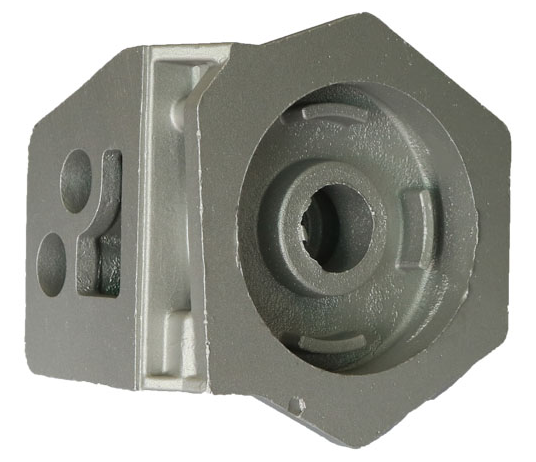
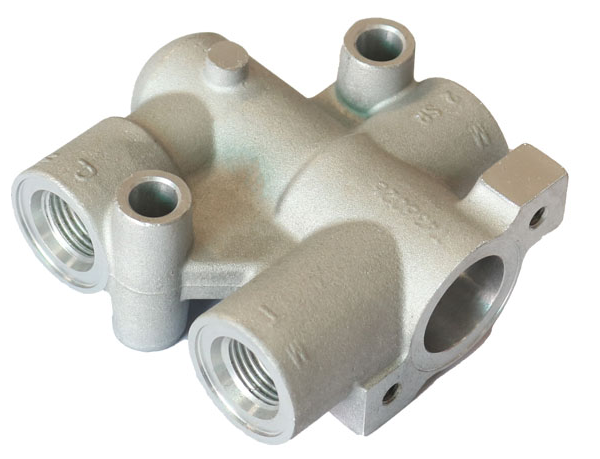
Before a hydraulic valve body is quoted, identify every functional surface and assign its required delivered state: coated, masked, finished after coating, or supplier-proposed for buyer approval. Tie final dimensions, thread gauges, sealing checks, cleaning, and inspection records to that state. A note such as anodize as required or mask critical features is not enough for suppliers to price the same work.
Bohua's current catalog includes three A356-T6 gravity-cast hydraulic valve product examples with drawing-based casting and CNC scope. The current Bohua surface-finishing guide also asks buyers to define areas that remain uncoated, machining sequence, packaging, inspection method, and acceptance criteria. These sources establish a relevant product and RFQ-review boundary; they do not prove that one coating, thickness, masking method, or tolerance is suitable for every valve design.
Build a feature-by-feature final-state map
Number each functional feature on the controlled 2D drawing and assign one required delivered state. Typical feature groups include spool or cartridge bores, cross passages, threaded ports, plug seats, O-ring grooves, seal lands, mounting faces, dowel holes, bolt spotfaces, and inspection datums. For each group, state whether the finish is required, prohibited, masked, removed by later machining, or left for the supplier and finisher to propose. Also state whether the drawing dimension applies before finishing or to the delivered part. This map should be part of the RFQ, not an assumption added after the quote.
Separate coating selection from functional acceptance
Do not choose anodizing, conversion coating, paint, powder coating, or another finish only from the part name. The buyer should define the environment, corrosion or wear objective, appearance requirement if any, mating materials, fluid-contact restrictions, and controlling finish specification. Then the casting supplier, machine shop, and qualified finisher can review compatibility with the alloy, casting surface, machining sequence, and functional interfaces. The quote should list the selected or proposed finish and every open assumption. This article intentionally gives no universal finish type or coating thickness.
Control bores, cavities, and internal passages
For spool bores, cartridge cavities, cross holes, and oil passages, state whether the finish is allowed, required, or excluded. Identify the final diameter, geometry, and surface requirement at the delivered condition, plus the inspection method. If a passage is masked or plugged during finishing, define removal, cleaning, drying, and confirmation that no temporary material remains. If a later machining or honing operation establishes the final surface, name that step and require the quote to include the post-process cleaning and inspection scope. Do not assume that a generic exterior coating note answers internal-passage acceptance.
Tie ports and threads to the inspection stage
For every threaded or gauged port, provide the standard, designation, depth, entry condition, seal function, and gauge requirement. State whether the thread is masked, finished, chased, or produced after coating, and which delivered-state check governs acceptance. If re-tapping or thread repair is allowed, define who approves it and what inspection follows. The RFQ should also identify plug seats, chamfers, sealing washers, and other interfaces that may be affected by the finishing sequence. The supplier must quote the agreed process and evidence rather than silently choosing a gauge stage.
Protect seal lands, grooves, and mounting datums
Mark O-ring grooves, gasket lands, metal-to-metal seal areas, mounting faces, dowel interfaces, and functional datums separately from cosmetic surfaces. For each one, state the required final surface condition, whether coating is permitted, how the mask boundary is located, and which dimension or finish requirement applies after all approved operations. If a bare or later-machined surface needs corrosion protection during storage or shipment, define a buyer-approved temporary method and removal requirement. A blanket note to mask sealing surfaces is too vague when different interfaces have different functions.
Lock the casting, CNC, and finishing sequence
Ask the supplier to return the proposed route as part of the quotation: casting and heat treatment where required by the drawing, rough or final CNC operations, deburr and cleaning, finishing, any permitted post-finish machining, final cleaning, inspection, and packaging. Identify the process stage at which datums are established and the stage that controls final acceptance. Also require the quote to state which work is performed by Bohua, which work may be coordinated with a qualified partner, and which specification remains buyer-controlled. This prevents a casting-only quote from being compared with a finished and inspected valve body.
Define inspection evidence and deviation authority
List the evidence required with first articles and production lots. Depending on project risk, this may include a ballooned drawing, final-state dimensional report, CMM results for named features, thread or plug-gauge results, coating certificate or thickness record when specified, visual acceptance, cleanliness confirmation, and lot traceability. State the sampling plan and record-retention expectation in the buyer documents. Define who may approve a mask-boundary change, coating rework, touch-up, thread repair, or other deviation. Without a written authority path, the same nonconformance can be accepted by one supplier and rejected by another.
Normalize the commercial quote
Request separate quote lines or explicit inclusions for casting tooling, cores, CNC fixtures, masking tools or plugs, finishing setup, special gauges, first-article inspection, production inspection, cleaning, protective packaging, and any outside-process coordination. Provide sample quantity, annual volume, lot assumptions, destination, and required delivered condition. Ask each supplier to list exclusions and open questions. The cheapest apparent piece price may cover only a machined blank while another quote includes finishing, final inspection, records, and protected delivery.
Bohua evidence, source boundary, and RFQ routes
Relevant Bohua routes are Hydraulic Valve product examples 1, 2, and 3; the Aluminum Casting Surface Finishing Guide; Valve Body Port and Thread Inspection Records; Casting plus CNC Machining; Quality Control; and Request Quote. The Aluminum Anodizers Council publication Specifying Anodized Finishes on Aluminum supports coating thickness as a purchasing variable, while its Anodizing Resource Center FAQ explains that anodizing can change dimensions and that selected areas can be masked. These external sources are used only for general specification logic. Send Bohua the controlled 2D drawing, STEP model, feature-state map, finish specification, inspection requirements, sample quantity, annual volume, and delivery condition for a drawing-based review. Bohua's product pages do not establish a universal coating rule for a new buyer design.
Specifications
| Delivered condition | Raw casting, heat-treated blank, machined body, finished body, or cleaned and protected assembly-ready component |
|---|---|
| Feature identification | Drawing-linked numbers for bores, ports, threads, passages, seal lands, grooves, faces, holes, and datums |
| Finish requirement | Buyer-specified finish or supplier proposal, controlling specification, purpose, and approved open assumptions |
| Mask boundary | Features where finish is required, prohibited, masked, removed later, or subject to buyer approval |
| Dimensional authority | State whether each dimension and surface requirement applies before finishing or to the delivered final state |
| Ports and threads | Thread standard, depth, sealing function, process sequence, gauge stage, repair rule, and required record |
| Seal and datum surfaces | Groove, land, mounting face, dowel, and datum finish state, mask location, and final inspection method |
| Internal passages | Finish permission, temporary plug removal, post-process cleaning, drying, and inspection requirement |
| Inspection evidence | Final-state dimensional, CMM, gauge, coating, visual, cleanliness, and traceability records as project-required |
| Deviation and commercial scope | Approval authority, rework limits, separate tooling and finish costs, sample quantity, annual volume, and delivery basis |
FAQ
Which hydraulic valve body surfaces should be masked before finishing?
There is no universal list. The buyer should map every bore, thread, passage, seal land, groove, mounting face, and datum to its function and required delivered state. The casting supplier and finisher can then review whether each surface is coated, masked, finished later, or subject to an approved proposal.
Should valve body dimensions apply before or after coating?
The drawing and RFQ should say so feature by feature. Functional dimensions and surface requirements should be tied to the delivered acceptance state, while any needed pre-finish manufacturing limits should be identified separately.
When should threaded ports be gauge-inspected?
Define the governing gauge stage in the RFQ. It may be after final machining, after finishing, or after an approved post-finish operation, depending on the buyer specification. Also define the thread standard, depth, seal function, repair rule, sampling, and required record.
Does every A356-T6 hydraulic valve body need anodizing?
No. Finish selection depends on the project environment, fluid-contact restrictions, wear or corrosion objective, appearance, mating interfaces, and controlled specification. Bohua's product examples establish a relevant casting and CNC family, not a universal coating requirement.
What should I send for a coating-ready hydraulic valve body quote?
Send the revision-controlled 2D drawing, STEP model, alloy and temper requirement, feature-state map, finish specification or approved proposal request, inspection and record needs, sample quantity, annual volume, delivered condition, destination, and timing.