
Make control-valve body quotations comparable by freezing the buyer-approved internal flow passage, core and CNC state, inspection evidence, cleanliness, full-valve Cv owner, records, and quote exclusions.
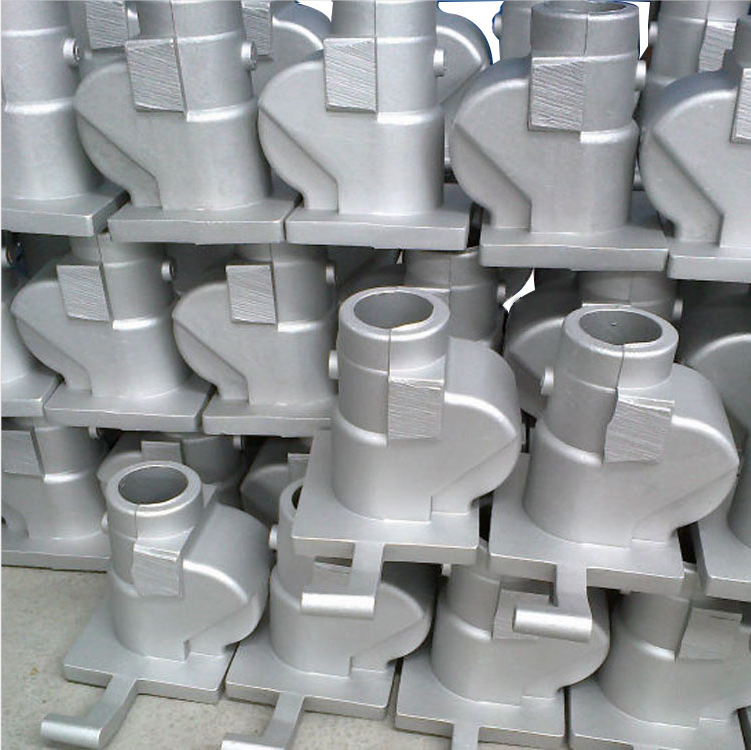
Before comparing cast control-valve body quotes, issue one controlled internal-flow-passage schedule that freezes the buyer-approved hydraulic master, flow direction, core-formed and machined surfaces, local datums, inspection evidence, cleanliness, full-valve Cv owner, records, and quote exclusions. A compliant casting, CMM report, scan, X-ray image, or pressure-boundary test does not by itself prove complete-valve flow capacity.
The flow passage is the buyer-approved internal path through the valve body between inlet, trim or seat region, and outlet. It can include core-formed, as-cast, blended, drilled, and machined zones defined by the exact valve architecture. The passage definition does not transfer valve sizing, trim selection, Cv, cavitation, noise, or complete-valve performance ownership to the casting supplier.
A common buyer scenario is that one supplier quotes a heat-treated casting blank, another includes final CNC and dimensional evidence, and a third silently assumes assembly or flow testing. Those prices are not comparable until the same passage master, supplied state, inspection package, test boundary, and exclusions are released to every bidder.
Lock the valve identity, trim architecture, and supply boundary
Start with the valve family, body part number, service and medium, nominal size or project identifier, flow direction, installed orientation, controlled body and assembly PDF and STEP revisions, material target, and the exact trim architecture that mates with the body. Identify the buyer or valve designer who owns the pressure boundary, hydraulic design, trim, and final performance.
Define the delivered state: raw casting, heat-treated blank, rough-machined body, finish-machined and cleaned body, trim-ready component, partly assembled body, or complete valve. List who supplies the seat, cage, plug, stem, bonnet, gaskets, packing, end connections, plugs, bolting, actuator, and test hardware. A casting-only quote and a complete-valve quote cannot share one undefined passage or test assumption.
Release one buyer-approved hydraulic master
Name the controlled 3D flow-passage model, 2D sections, assembly drawing, trim files, and any buyer-approved hydraulic or CFD definition. State which file governs when the model, sections, legacy sample, and drawing notes disagree. Number the inlet, outlet, seat or trim region, turns, branches, pockets, transitions, and auxiliary connections that belong to the finished flow path.
Emerson's official Fisher GX page states that engineered passages within that valve body provide capacity and create a stable flow pattern. The procurement lesson is that internal passage geometry can affect full-valve behavior and therefore must remain tied to the approved valve design. That product page is context, not a geometry source for a Bohua project: https://www.emerson.com/en-us/catalog/fisher-gx .
Separate core-formed, as-cast, blended, drilled, and machined zones
Color-code or otherwise identify the final state of every passage zone. State which surfaces are formed by a core or tool, remain as cast, are trimmed or blended, are created by drilling, and are accepted only after final CNC. Define allowed stock, edge condition, transition limits, surface requirement, and repair authority by zone rather than applying one generic note to the whole cavity.
Bohua's live industrial valve-body product page verifies a gravity-cast ZL114 or A356-family example and identifies internal soundness, bore concentricity, sealing flatness, ports, threaded holes, datum faces, and sealing grooves as relevant controls. It does not reveal the pictured part's internal hydraulic architecture, Cv, pressure class, or universal stock value: https://www.bohua-casting.com/products/screw-machine-valve-body-38 .
Build a passage-zone and mating-reference schedule
Give every controlled zone a stable ID and link it to the model and drawing. For each zone, list its function, flow direction, bounding surfaces, adjacent seat or trim part, final manufacturing state, local wall reference, datum, surface condition, accessibility, inspection method, first-article frequency, production frequency, record, and reaction plan. Mark open design inputs and quote exclusions.
Keep trim-controlled features separate from casting features. A seat pocket, cage register, plug path, stem guide, bonnet locator, and end connection can constrain the flow path, but their final fit and function depend on the approved mating components. Link to the adjacent Bohua seat and end-interface guides instead of repeating them: https://www.bohua-casting.com/en/resources/industrial-valve-body-seat-pocket-stem-alignment-rfq/ and https://www.bohua-casting.com/en/resources/industrial-valve-body-face-to-face-flange-rfq/ .
Connect tooling, cores, heat treatment, and CNC to the master
Ask the supplier to review parting strategy, core or insert concept, core location references, draft, extraction, gates and feeders, thick-to-thin transitions, local bosses, heat-treatment state, distortion risk, casting cleanup, machining stock, tool access, fixtures, and final datum establishment against the approved passage master. Identify where a tooling or core shift could alter a transition, remaining wall, trim relationship, or machining-breakthrough risk.
This review does not transfer hydraulic design to the foundry. The buyer controls the approved flow path and allowable deviation; the supplier proposes a manufacturable casting and machining plan. Bohua's gravity-casting and casting-plus-CNC pages support drawing-based process, tooling, datum, and fixture review, but the exact core strategy, stock, tolerance, and sequence require project files: https://www.bohua-casting.com/processes/gravity-casting and https://www.bohua-casting.com/aluminum-casting-cnc-machining-supplier .
Choose geometry evidence by feature and access
Create an inspection map that assigns each question to a feasible method. External datums, machined bores, faces, holes, and accessible profiles may use CMM, gauges, surface-roughness measurement, or scanning under an approved setup. Hidden internal zones may require buyer-approved templates, accessible point checks, replicas, borescope evidence, controlled sectioning, radiography, CT, or another confirmed method. Do not list a method until access, resolution, sampling, acceptance, and supplier scope are agreed.
Bohua's quality page verifies CMM support for dimensions and geometric tolerances, a 3D scanner for surface-to-CAD comparison, and X-ray equipment for internal discontinuities. These tools answer different questions. A surface scan does not prove hidden soundness, and X-ray does not automatically prove passage profile or final Cv: https://www.bohua-casting.com/quality-control .
Specify radiographic evidence without overstating it
If radiography is required, name the method, applicable reference, edition, zone, view, part state, severity or acceptance source, personnel qualification basis, sampling, record, and reaction plan. Do not use the phrase X-ray inspection as a complete acceptance requirement.
ASTM's current E155-20(2026) page describes reference radiographs for types and degrees of discontinuities in aluminum and magnesium castings and distinguishes film radiography from digital reference images. Use the buyer-approved standard and modality for the exact project; do not treat a reference radiograph as a wall, profile, flow, or leak specification: https://store.astm.org/e0155-20r26.html .
Separate geometry, internal soundness, pressure evidence, and Cv
Use separate evidence layers. Dimensional evidence verifies the approved passage and interfaces in a defined state. Nondestructive examination addresses selected internal or surface indications under a named acceptance source. A bare-body pressure or leak test checks a defined component boundary, fixture, closure map, medium, condition, and acceptance. Assembled valve evidence adds the approved trim, bonnet, seals, joints, and hardware. Full-valve flow evidence covers Cv or Kv, characteristic, travel, pressure recovery, cavitation, noise, shutoff, or another system result only when the buyer defines the assembly and method.
Valmet's official control-valve sizing coefficient document describes Cv values based on laboratory measurements with the valve installed in a defined piping setup. That supports keeping Cv with full-valve evidence rather than treating casting inspection as proof. It does not set a Bohua capacity or test method: https://www.valmet.com/globalassets/sharepoint/documents/web/removed-from-import-folder/10cv20en.pdf .
Control surface condition, cleanliness, and protected delivery
Define allowable flash, fins, loose media, burrs, grinding marks, exposed core wire, chips, residue, cleaning fluid, and foreign material by passage zone. State the wash, flush, and dry boundary if buyer-controlled, the verification method, temporary closures, identification, packaging orientation, and protection for machined or coated interfaces. Separate component cleanliness from assembled-valve or system cleanliness.
If the buyer requires a numeric particle limit, gravimetric result, borescope record, wipe check, or another cleanliness method, supply the procedure, zone, frequency, and acceptance. General clean, burr-free, or production-ready notes do not create comparable supplier quotes.
Plan first articles, production records, and change control
For first articles, identify the ballooned drawing, approved hydraulic master revision, passage-zone map, material and heat-treatment records, core or tooling revision, external and accessible internal geometry evidence, buyer-selected NDE, cleaning confirmation, component pressure evidence, and full-valve flow result only when included. For production, define which characteristics are checked on every part, by sample, or by periodic validation, with gauge or equipment ID, calibration status, program revision, traceability, record retention, and reaction plan.
Require approval before changing the valve or trim revision, passage master, material or temper, casting process, tooling, core or insert, gate or feeder, heat treatment, machining stock, CNC program, fixture, datum, blending, cleaning, inspection method, sampling, NDE source, repair route, or subcontractor. An internal change can affect geometry or flow even when the exterior looks unchanged.
Normalize the quote and send a drawing-ready RFQ
Ask every supplier to price the same boundary: engineering review, tooling and cores, raw casting, heat treatment, rough and finish CNC, fixtures, gauges, passage evidence, buyer-selected NDE, cleaning, protection, component pressure or leak test, supplied trim or hardware, assembly, full-valve flow test, packaging, and export terms. Put exclusions and open assumptions beside the affected passage zone or evidence layer.
Useful Bohua routes are the valve-body application at https://www.bohua-casting.com/applications/valve-body , commercial valve-body page at https://www.bohua-casting.com/valve-body-manufacturer , quality evidence at https://www.bohua-casting.com/quality-control , and adjacent minimum-wall guide at https://www.bohua-casting.com/en/resources/industrial-valve-body-minimum-wall-thickness-rfq/ .
Send the controlled body and assembly PDF and STEP files, valve and trim identity, flow direction, hydraulic master, passage-zone schedule, material and supply state, tooling and CNC boundary, inspection and cleanliness plan, pressure and Cv owners, records, annual volume, tooling status, destination, and timing through https://www.bohua-casting.com/request-quote?source=jhclaw-content . Bohua can then review the defined cast-and-machined body without treating a product image or inspection record as full-valve performance proof.
Specifications
| Valve identity | Valve family, body part number, service and medium, flow direction, project ID, installed orientation, and controlled revisions |
|---|---|
| Supply boundary | Raw, heat-treated, rough-machined, finish-machined, cleaned, trim-ready, partly assembled, or complete-valve state |
| Hydraulic master | Buyer-approved 3D passage model, controlled sections, assembly and trim references, revision authority, and conflict rule |
| Passage-zone map | Stable zone IDs, function, bounding surfaces, local interfaces, final state, accessibility, evidence, and reaction plan |
| Trim references | Approved seat, cage, plug, stem, bonnet, seals, end connections, and owner of each mating relationship |
| Surface state | Core-formed, as-cast, trimmed, blended, drilled, machined, coated, or protected zones and buyer-approved limits |
| Core and tooling plan | Parting, core or insert concept, location references, gates and feeders, heat treatment, change triggers, and approval owner |
| CNC and datums | Casting stock, tool access, rough and finish sequence, fixtures, datum frame, support state, and final acceptance stage |
| Geometry evidence | Feature-specific CMM, gauge, scanner, template, replica, section, or other confirmed method with frequency and record |
| Internal soundness | Buyer-selected NDE method, reference and edition, zones, views, acceptance, personnel basis, sampling, and reaction |
| Cv and test boundary | Separate dimensional, NDE, bare-body pressure, assembled-valve, and full-valve Cv or Kv evidence and owners |
| Commercial and change scope | Tooling, fixtures, gauges, cleaning, tests, records, quantities, destination, exclusions, deviations, and approval triggers |
FAQ
What should a buyer include in a control valve body flow-passage RFQ?
Include the controlled body and assembly files, valve and trim identity, flow direction, hydraulic master, passage-zone map, material and supplied state, core and tooling boundary, CNC datums, geometry and NDE evidence, cleanliness, pressure and Cv owners, records, quantities, and quote exclusions.
Does a conforming valve body casting prove the required Cv?
No. Casting conformance can support material, geometry, internal-soundness, and component-boundary evidence. Cv or Kv is full-valve evidence that depends on the approved body, trim, assembly, travel, test setup, and method owned by the valve designer or buyer.
Can X-ray, 3D scanning, or CMM prove the whole internal flow passage?
Not automatically. Each method has a different purpose and access limit. The RFQ should map every zone to a confirmed method, datum or setup, resolution, acceptance, frequency, and record rather than treating one tool as complete proof.
How should inaccessible valve body passages be inspected?
The buyer and supplier should select a project-appropriate method such as accessible point checks, templates, replicas, borescope evidence, controlled sections, radiography, CT, or another verified route. Availability and acceptance must be confirmed before quotation.
What does Bohua need for a valve body drawing review?
Send PDF and STEP files, valve and trim identity, material and supply state, flow direction, internal-passage definition, core and machining assumptions, datum and inspection plan, cleanliness, component and full-valve test boundaries, sample quantity, annual demand, tooling status, destination, and timing.